
95% Are Traders? The Real Factory-to-Trader Ratio on Alibaba
95% Are Traders? The Real Factory-to-Trader Ratio on Alibaba
On Alibaba traders vs factories, no official split exists - the platform does not audit the claim. Published estimates range widely: Alibaba's own supplier-data tooling puts trading companies at roughly 80% of listings (Accio data cited by Newway Apparel, 2026), while a 218-visit field study found 34% of self-declared manufacturers were intermediaries (Winning Adventure, January 2024 - May 2026). Either way the cost is identical: a hidden layer adds 10-30% to your unit price.
Alibaba Traders vs Factories: What the Published Numbers Actually Say
The headline you see quoted in sourcing forums - "95% of Alibaba suppliers are traders" - is not a measured figure. It is a practitioner's impression, usually from someone buying in a category where it happens to be nearly true. The measured figures are lower and more interesting, and they disagree with each other because they are counting different things: some count listings, some count suppliers, some count only companies that explicitly claimed to be manufacturers, and some count only one product category.
Read them as a range, not a fact. In Alibaba traders vs factories, the honest position is that the middleman share is somewhere between one third and four fifths depending on your category, and that you cannot know where your specific supplier falls without checking. Alibaba.com hosts more than 200,000 verified suppliers (Alibaba.com Global B2B Influence data, 2026) - a population far too large for any single ratio to describe.
| Estimate | What it actually measured | Source and year |
|---|---|---|
| ~80% traders / ~20% direct manufacturers | Platform-wide supplier composition from Alibaba's own sourcing tooling | Accio (Alibaba) data cited by Newway Apparel, 2026 |
| 60-70% middlemen | Consumer goods, textiles and general merchandise categories only | ChinaMakersHub, 2026 |
| 40-50% trading companies | Commonly cited platform-level figure across all categories | JustSpec, 2026 |
| 25-30% legitimate factories, 40-50% traders, 15-20% hybrid | Segmented supplier-type breakdown including hybrid factory-traders | Mangors Sourcing, 2026 |
| 34% of self-declared manufacturers were intermediaries | 218 physical factory visits over 29 months - the only on-the-ground sample | Winning Adventure, Jan 2024 - May 2026 |
| 30-40% of Gold Suppliers are trading companies | Badge-holding suppliers specifically | Mangors Sourcing, 2026 |
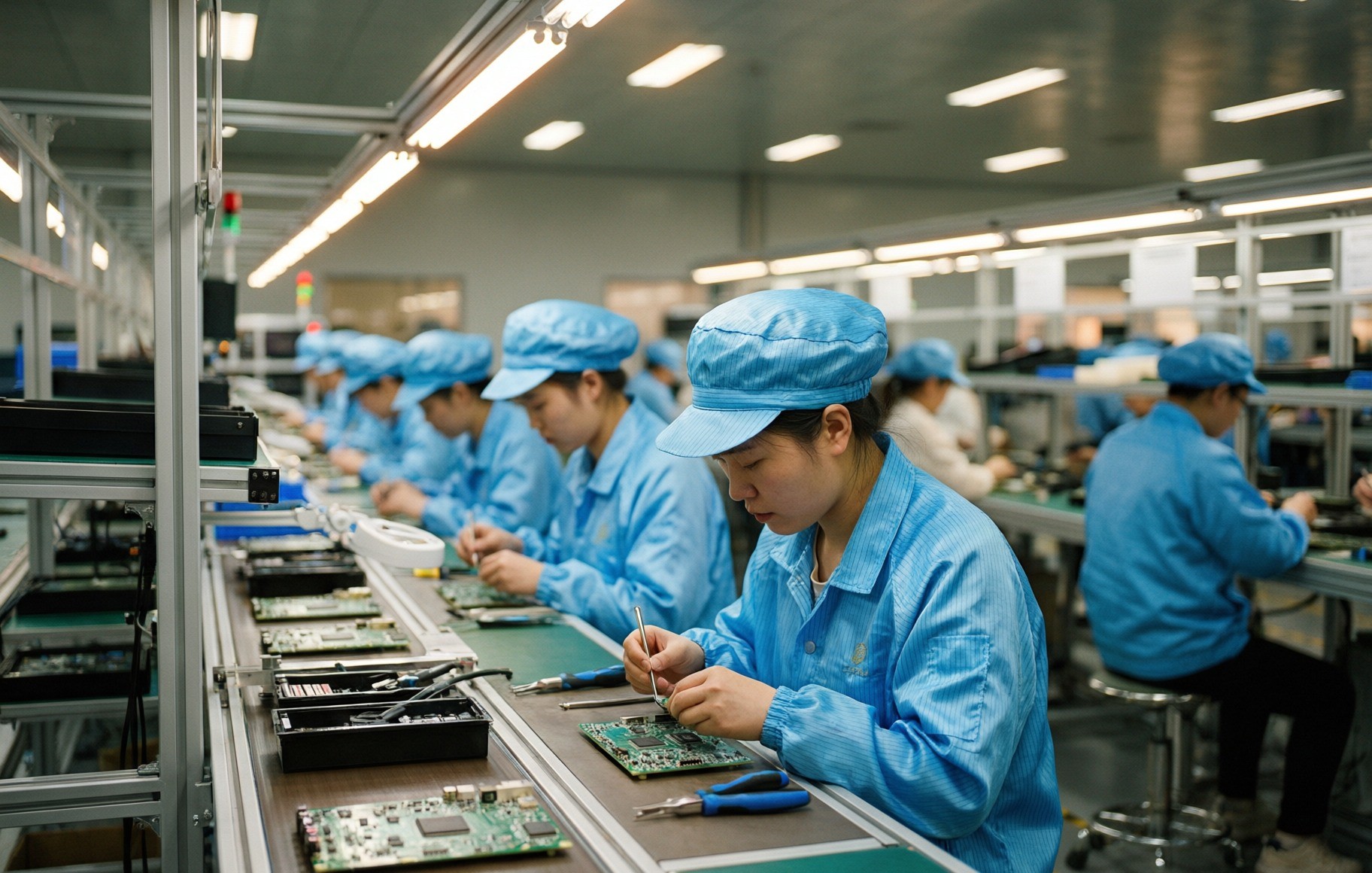
Where the 70-95% Estimate Comes From
The high end of the range is a category artefact, and it is worth understanding rather than dismissing. Importers who buy small commoditised consumer goods - phone accessories, kitchen gadgets, party supplies, promotional items - genuinely encounter a supplier base that is overwhelmingly intermediaries, because those categories are made in thousands of tiny workshops that have no English capability, no export licence and no interest in maintaining a storefront. Somebody has to sit between the workshop and the world, and in those categories almost everybody you can reach in English is that somebody.
At the other end, an importer buying industrial machinery, PCB assemblies or moulded automotive parts sees a much higher factory ratio, because those makers export directly and can afford a sales team. Both importers then post their experience online as if it were the platform average. The 218-visit study is the most useful data point precisely because it is neither: it sampled across categories and it verified physically, and its 34% figure counts only suppliers who had actively presented themselves as manufacturers.
Read the denominator before you quote the number
"80% of suppliers" and "34% of self-declared manufacturers" are not contradictory - they count different populations. Ask which one a statistic used before you build a sourcing decision on it.
Why Alibaba Does Not Penalise a 'Manufacturer' Claim
This is the structural answer, and it is simpler than most buyers expect. Business type is self-selected at registration. Alibaba's own seller onboarding walks a new account through choosing between Manufacturer, Trading Company and Agent as a registration field (Alibaba.com seller onboarding documentation, 2026). Nothing in the standard sign-up flow requires a production licence to pick the first option, and a company that both manufactures one item and resells forty others can select Manufacturer entirely honestly.
The badge tiers layer on top of that without resolving it. Gold Supplier is a paid membership - Alibaba's own seller-side material prices the tier at around $3,499 per year (Alibaba seller guidance, 2026) - and it certifies payment, not production. Verified or Assessed status means a third-party firm such as SGS, TUV or Bureau Veritas checked some claims on site, which is genuinely more meaningful, but the assessment may confirm that premises exist without confirming they produce your specific item. The platform does enforce against outright fraud: more than 2,100 Gold Suppliers were delisted in 2023 for falsified certifications (Alibaba platform enforcement records). Enforcement targets lying about documents, not optimistic self-classification.
Nobody is committing fraud when a trading company calls itself a manufacturer on Alibaba. That is the problem - the claim is a checkbox, not an assertion anybody audits.
Six Signals That Separate a Trader from a Factory
You can classify most listings from your desk in about fifteen minutes using signals rather than documents. None of these is conclusive alone; three or more pointing the same way is. This is pattern recognition, not verification - the actual pre-order verification procedure is a separate six-step sequence we set out on the blog.
| Signal | Points to a factory | Points to a trader |
|---|---|---|
| Catalogue breadth | Narrow and deep - variants of one process | Ten or more unrelated categories on one storefront |
| Technical answers | Machine tonnage, cycle time, tolerance and capacity answered live | Vague replies, or 'let me check with the workshop' |
| Video access | Walks the line on request, machines audible | Showroom only, or repeated rescheduling |
| Registered business scope | Includes production, processing or manufacturing wording | Wholesale, retail or import-export wording only |
| Address type | Industrial zone, matching the registered address | Commercial office tower or a shared registered-agent address |
| Price behaviour under pressure | Small, cost-justified movement | Large instant concessions - the margin was never theirs to defend |
Add one more that only shows up after delivery. When we open cartons at our Yiwu warehouse, factory-packed goods arrive with one carton specification and one production date code across the entire lot. A trader's consolidation of the same SKU turns up with two or three carton sizes and mixed date codes, because it was bought from more than one workshop to fill the quantity. That is not a defect in itself, but it tells you exactly how many hands the order passed through - and it is the reason a repeat order can look subtly different from the first one.

The Licence, Video and Domestic-Price Triangulation
Three cheap sources, cross-referenced, usually name the real maker. First, the registered business scope on the government registry: a manufacturer's scope contains production wording, a trader's does not. This single field separates makers from middlemen faster than anything visible on the listing itself. Second, a live camera walk you direct yourself, which a reseller cannot fake without borrowing premises. Third, the domestic price.
The third one is the least used and often the most revealing. Search the same item by image on 1688, China's domestic wholesale platform, and read the price band Chinese buyers pay. An export quote sitting 20-40% above domestic is a normal export premium - that gap is the documented structural difference between the two platforms. A quote sitting at two and a half or three times domestic is not an export premium; it is a layer. You do not need to buy domestically to use this. You need to know the number before you negotiate.
- Registry scope wording: production or processing present, or absent
- Live directed video: line access granted, or showroom only
- Domestic price band: export quote within a normal premium, or a multiple of it
- Company name pattern: names containing manufacturing terms versus trading or import-export terms
- Cluster logic: does the registered city actually make this product, or is it a distribution hub
What a Hidden Middleman Actually Costs You
This is the part that matters commercially, and the published figures converge tightly. Trading companies embed roughly 10-30% margin over factory-direct pricing to cover platform membership, transaction fees and handling (Jadeant / Shanghai Garment data cited by Newway Apparel, 2026). JustSpec's 2026 assessment puts the commodity-product range slightly wider at 15-40%. Working the other direction, buying factory-direct is documented as reducing per-unit cost by 15-25% versus platform suppliers (Shanghai Garment, 2026). Saudara's 2026 cost model on a $50,000 order puts the trading-company markup line at $10,000-$20,000.
Run it against your own volume rather than a container example. A 15% layer on a $30,000 annual buy is $4,500 - roughly the cost of a category-level product development project you are not funding. On a $200,000 programme it is $30,000. And the margin is only half the cost. The other half is invisibility: when the middleman controls the factory relationship, you cannot audit the line, you cannot lock a material grade, and you find out about a substituted component when your customers do.
Traders Are Not Always the Wrong Answer
It would be dishonest to end there. Trading companies exist because they solve real problems, and in three situations they are the correct choice even at a 20% premium. First, multi-category buying: if you need forty SKUs across eight processes, a competent trading house is cheaper than eight factory relationships. Second, sub-MOQ volume: factories that will not quote below 5,000 units will supply a trader who aggregates demand from ten buyers. Third, capability: a good trading company carries export experience, English documentation and its own quality control, none of which a 40-person workshop in Yongkang has.
The distinction that matters is not trader versus factory. It is disclosed versus hidden. A trading company that tells you it is a trading company, names its margin and lets you inspect at the factory it buys from is a service provider. One that lets you believe you are buying direct while quoting a factory-direct price is charging you for a relationship you do not have. Ask the question directly - the answer, and how fast it comes, is the whole test.
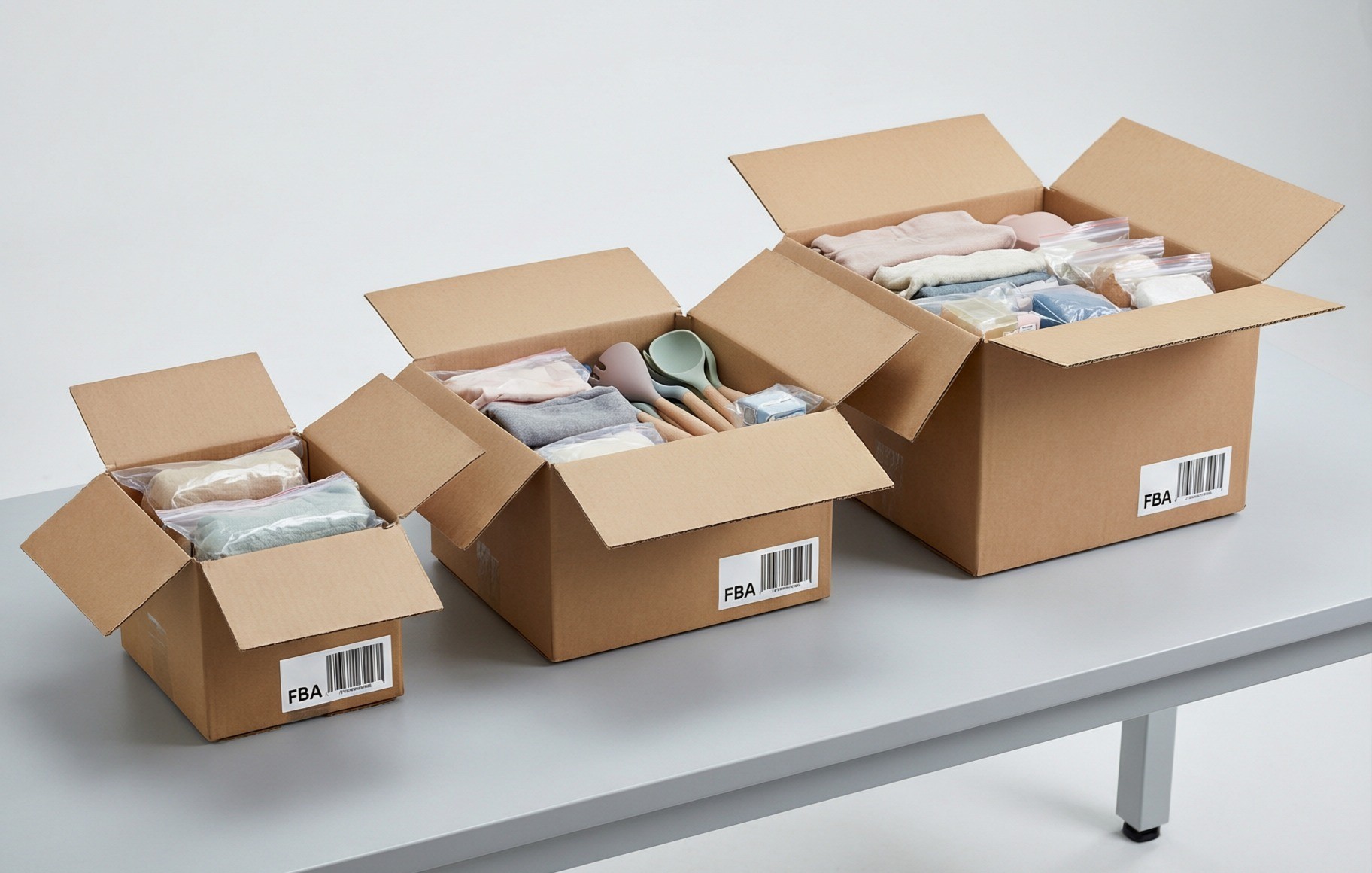
How We Trace the Real Manufacturer Behind a Listing
The Yiwu International Trade City is the clearest place in China to watch the layer form. In District 1, where the toy, artificial flower and jewellery booths run across three floors, a booth is typically twelve to fifteen square metres and is operated by a family that owns no machinery whatsoever. Bring them a specification and they will walk two aisles over, or phone a workshop in Yongkang or Wenzhou, and quote you within the hour. That is a genuine service - the aggregation is real work - but the "factory" in the conversation is a contact list, and the price you are quoted contains their margin whether or not anybody mentions it.
So we work backwards from the goods rather than forwards from the listing. Carton markings, mould cavity numbers, date codes and the domestic price band usually identify the workshop within a few days, and once the maker is named the negotiation changes shape entirely: you are no longer arguing about a percentage, you are deciding whether the aggregation service is worth paying for. RND Sourcing has been running that trace out of Yiwu for over twenty years, and you can see the categories we cover on our product pages or read more at yourchinagent.com.
Alibaba Traders vs Factories: Frequently Asked Questions
How many Alibaba suppliers are actually traders?
There is no audited figure. Published estimates range from 34% of self-declared manufacturers in a 218-visit field study (Winning Adventure, 2026) to roughly 80% of all suppliers in Alibaba's own tooling data (Accio, 2026). The share is highest in commoditised consumer goods.
Is the 95% figure true?
It is a practitioner impression rather than a measurement, and it reflects small-commodity categories where it is close to accurate. No published study supports 95% as a platform-wide number.
Does a Manufacturer label on a listing mean anything?
Very little on its own. Business type is a self-selected registration field, and a company that manufactures one item can legitimately select it while reselling everything else it lists.
How much does a trading company add to my price?
Between 10% and 30% over factory-direct in most published estimates for 2026, with commodity products sometimes reaching 40%. Buying direct is documented as reducing per-unit cost by 15-25%.
Should I always avoid trading companies?
No. For multi-category buying, sub-MOQ volumes or products needing export and compliance expertise, a disclosed trading company is often the cheaper total answer. The problem is a hidden layer, not a middleman.
The ratio matters less than knowing which side of it your own supplier sits on - and that is a fifteen-minute question, not a research project. If you want the maker behind a specific listing identified and the domestic price band checked before you negotiate, send the link through our inquiry form and we will tell you what we find, including when the trading company turns out to be worth keeping.


