
Digital Supplier Audits: Verifying a Chinese Factory Without Flying There
The Factory You Cannot Visit Is Still a Factory You Can Verify
Most "manufacturers" you meet on a sourcing platform are trading companies, and in China the gap between a trading company with a rented workshop and a real factory is a business model, not an accident. The usual advice is to fly over and look. That is good advice for the final shortlist and a poor use of a week when you have twelve candidates and one of them is almost certainly a mailbox.
A digital audit is not a Google search. It is six independent evidence layers - registry, geolocation, utility-and-capacity arithmetic, customs shipment records, intellectual property ownership, and social consistency - that must converge. Any single signal can be faked cheaply. Six converging signals are expensive to fake and, in our experience, usually not worth faking. This guide is the sequence we run from our desk in Yiwu before a first order and before we are asked to guarantee a capacity number.
The discipline matters more in 2026 than it did five years ago. Travel costs are up, audit slots book out, and a growing share of buyers will place a first order without ever standing in the plant. That is survivable - but only if the remote work is done to the standard of a real audit rather than the standard of a first impression.

Layer 1: Registry Truth at gsxt.gov.cn
Start with the exact Chinese legal name and the 18-character Unified Social Credit Code printed on the business licence - not the English brand, not the name on the platform listing. Those are marketing names; the customs and regulatory systems use the registered one, and a search on the wrong string returns either nothing or a different company.
The National Enterprise Credit Information Publicity System at gsxt.gov.cn, operated by the State Administration for Market Regulation, is the authoritative free starting point. Read six things: registration status, registered capital, legal representative, registered address, business scope, and administrative penalties. Then open the annual report filings and the abnormal-operations list. A company that has been listed as abnormal and restored is not disqualified, but you want to know when and why.
The business scope test is the one most buyers skip. Manufacturing has to appear in the scope for the entity to be a manufacturer in its own right. A scope built around wholesale, retail, import-export or "technology consulting" describes a trader, and a trader is a legitimate supplier - as long as you know that is what you are buying, and you are not paying factory-direct pricing for a margin layer.
Three free companions finish the legal picture: China Judgments Online at wenshu.court.gov.cn for civil and commercial litigation; the enforcement disclosure site at zxgk.court.gov.cn for judgments that were not paid; and Credit China at creditchina.gov.cn for tax arrears, wage arrears, administrative penalties and environmental violations. A supplier with active wage-arrears records has a labour problem coming, and labour problems become delivery problems.
Keep the conclusion modest. A clean registry proves the entity exists, is active and has not been penalised recently. It proves nothing about whether that entity makes your product. The registry is the gate, not the verdict.
Layer 2: Geolocation - Baidu Maps, Not Google
Google's imagery and street data for mainland China are years out of date; a plant that has operated for five years can still show as an empty field. Baidu Maps at map.baidu.com is the accurate reference inside China. Paste the Chinese characters from the licence into the search box - pinyin transliterations and English translations frequently fail to match at all.
Then read the pin in three passes. First the satellite view: does it land inside an industrial park, on a building with loading bays, truck-width access roads and rooftop ventilation, or on apartment towers, a shopping street or bare land? A real production site needs infrastructure that residential and commercial districts do not have. Second, the street view: factories commonly paint their name on the gate or above the reception entrance. A gate sign that does not match the name on your contract is either a subcontractor or a trader standing in someone else's yard. Third, the footprint itself - use the map measuring tool on the roof. A supplier claiming 50,000 square metres whose building measures 2,000 has inflated its scale by a factor of 25, and that single number tells you how much of the rest of the pitch to discount.
Add the city test. A manufacturer registered in Shenzhen that describes its plant as being in Dongguan, ten kilometres away inside the same industrial cluster, is a yellow flag worth a question. A registered address in one province and a claimed plant in another is a red flag worth a stop.
Most buyers already do a two-minute version of this check. The difference here is the standard of proof: not "is there a building at this address" but "is the building the size, the type and the configuration they claim, and does the signage belong to the entity that will invoice me".
Layer 3: Utility Bills Against the Capacity Math
Claimed capacity is a marketing number until it survives arithmetic. Reverse-engineer it: machines multiplied by cycle time multiplied by shifts multiplied by working days gives units per month. If a factory says it runs 28 injection-moulding machines around the clock and your part has a 90-second cycle, the maths will tell you what that floor can actually produce - and a forty per cent gap between the machine-count story and the delivery promise is not a rounding error. Either the machines do not exist or someone else is making your parts.
Then convert the claim into energy. A plant running three shifts cannot draw residential-level electricity. Ask for twelve months of electricity and water bills, or the local grid's consumption disclosures where they are published, and compare them with the load your capacity calculation implies. The same logic applies to headcount: cross-check the claimed workforce against social-insurance contribution records. A claim of 380 employees against records implying 230 is your first audit finding, and you found it without leaving the desk.
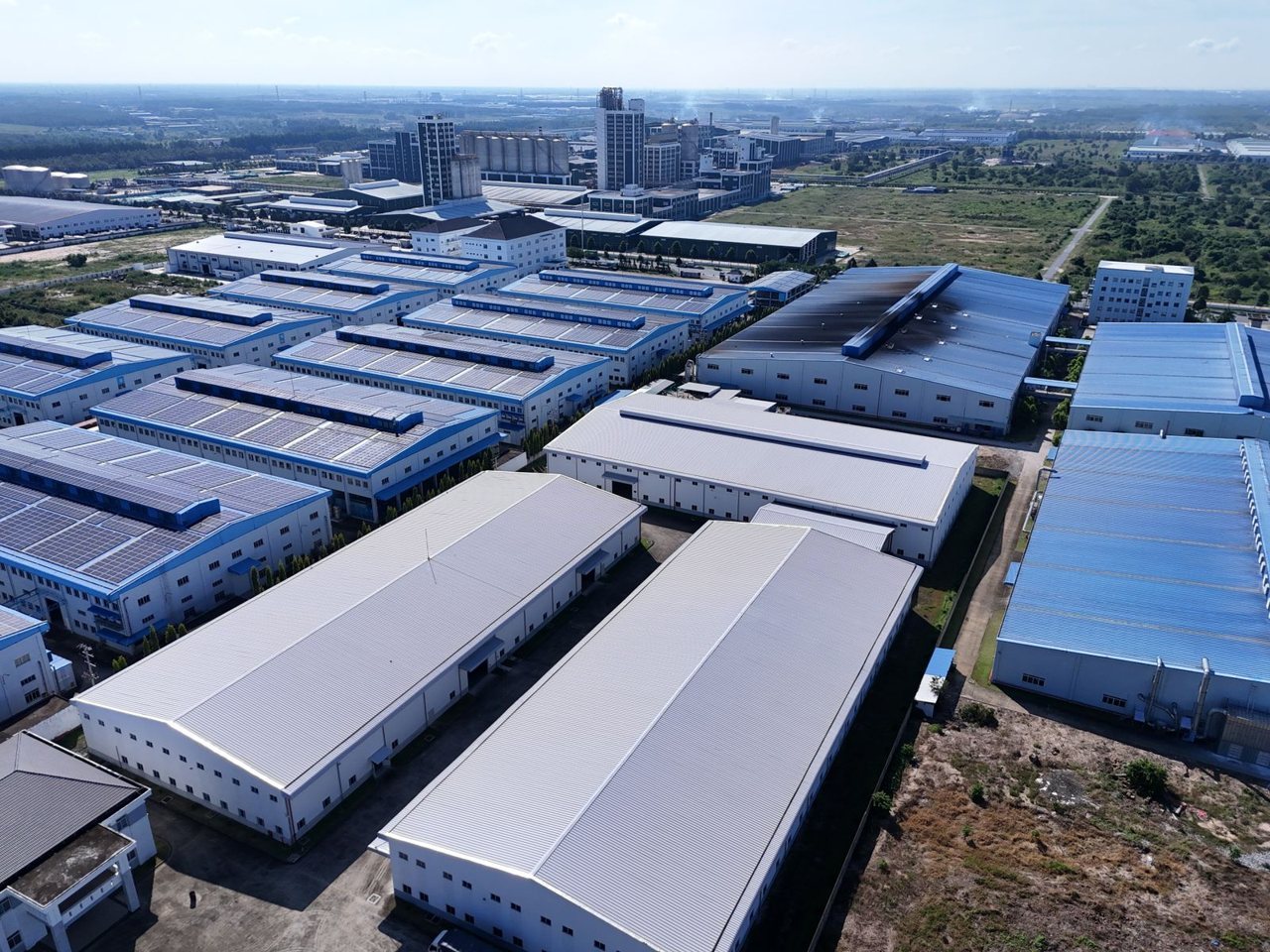
Two documented cases show how decisive this layer is. In one, a Guangdong LED-driver manufacturer claimed 1.2 million units per month; bill-of-lading analysis across all destinations showed roughly 840,000 units per month leaving, including 220,000 to the buyer's own European subsidiary. The gap was not fraud on the invoice - it was capacity that had already been sold elsewhere, and it forced a renegotiation of exclusivity terms and a quarterly capacity-reservation clause. In another, an electric-scooter importer was told the supplier ran twelve SMT lines; infrared satellite imagery showed six operational thermal signatures during peak shifts, and the discrepancy was confirmed against local grid electricity disclosures. The MOQ and the delivery schedule were rewritten as a result.
This is the only layer that measures production rather than describing it. Energy in, units out - the rest is narrative.
Layer 4: Customs Export Records - What They Actually Shipped
Theoretical capacity is what a factory could do. Shipment-level bill-of-lading data is what it did. That distinction is the whole value of this layer: it is backward-looking, third-party and derived from filings the supplier did not write for your benefit.
The datasets are commercial but accessible. Panjiva, part of S&P Global Market Intelligence, profiles more than nine million organisations against a billion-plus shipment records. ImportGenius aggregates U.S. Customs bill-of-lading data. Volza publishes shipment-level records across 203 countries and refreshes daily. For official cross-checks, the UN Comtrade database is free and covers more than 200 economies. Most of these let you search by company name, product description or HS code.
Search by the exact Chinese legal name and the credit code, never the English brand. Aliases, trading-company names and forwarder entities routinely obscure the true exporter, and a search on the brand usually returns a different company or a blank page.
Read four things once you have the records. Shipment frequency over several years - a supplier shipping steadily for six years is a different counterparty from one with a burst of activity last quarter. Actual monthly volume by HS code, which you can compare against the capacity claim. Buyer concentration, because a plant whose output is committed to one dominant buyer has very little capacity available to you regardless of what the sales deck says. And destination markets, which should match the compliance and certification claims they have made to you.
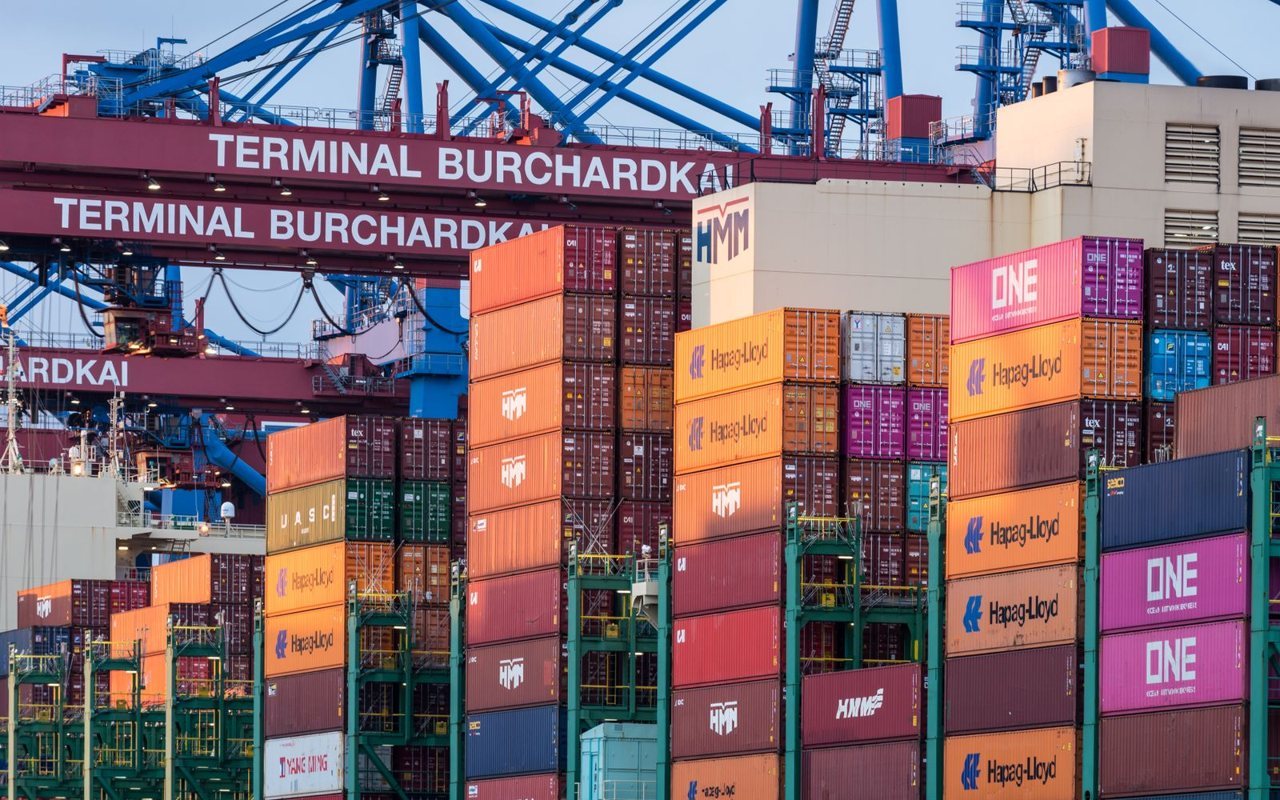
Be honest about the limits. Customs data lags by weeks or months. Intermediary forwarders can mask the true origin. Some destination markets publish nothing usable. Treat shipment records as one converging signal - powerful, but not a verdict on its own.
Layer 5: CNIPA - Do They Own the Trademark or Patent They Quote?
When a supplier says the product is patented or the brand is registered, you may end up relying on that claim when you resell - and an infringement claim lands on the importer, not only on the factory. Both rights are registered with the China National Intellectual Property Administration and both are checkable for free.
For trademarks, search the China Trademark Office database at sbj.cnipa.gov.cn. Match the registrant against the supplier's exact legal name; a similar name is not the same name. Check the class, because Chinese trademarks are registered by Nice Classification class and a registration in one class confers no rights in another - a Class 25 clothing mark says nothing about Class 9 electronics. Check the status as well: pending, registered, refused, opposed or invalidated. Only a live registration is an enforceable right, and "applied for" is a hope rather than an asset.
For patents, use the CNIPA Patent Search and Analysis System at pss-system.cponline.cnipa.gov.cn. Chinese patent numbers follow a parseable structure: CN, then the year, then a type digit, then the serial - where 1 is an invention, 2 a utility model and 3 a design. A number that does not parse this way is suspect, and a "patent" whose number turns out to be a utility model is being oversold. Check legal status too, because patents lapse when annuities go unpaid; a granted patent from five years ago may already be dead.
Ownership matters as much as validity. If the trademark or patent belongs to a third party, the supplier must be a licensee, and you should see the licence - including whether it permits manufacture for export and whether you, as the buyer, are covered. A supplier that owns nothing and licenses nothing is simply using someone else's intellectual property, and reselling that product can make you the infringer in your own market.
The red flags are consistent: a certificate bearing a different company's name with no licence attached; the right class or the right product missing; "patent pending" with no application number you can look up; a number that fails the CNIPA format; and outright refusal to share the registration number. Ask for the number and look it up yourself - certificates can be edited, the database cannot.
Layer 6: Social Consistency and Reverse Image Search
Chinese factory owners publish constantly on WeChat Moments and Douyin, the domestic short-video platform. That makes social history an unusually cheap and unusually honest signal. A company WeChat account with years of history and production clips in its feed is a different animal from a blank profile created last month attached to a claim of fifteen years of exports. On Douyin, a working factory posts shipments, new equipment and team events; a broker posts a catalogue.
Reverse image search every facility photograph with Google Lens, TinEye or Baidu Images. The same workshop appearing on five different suppliers' websites is a stolen image, and uncropped watermarks from another agent are an easy catch. Look at the signage as well: real signs are weathered and cast shadows consistent with the building, while a digitally overlaid sign has edges too sharp for the surrounding texture.
The highest-yield single request is a specificity test. Ask for the original business licence held up in front of the main gate, or a named machine on the line photographed beside a sheet of paper showing today's date and your company name. A real factory complies in minutes, because showing production shortens the negotiation. A trader stalls, and the excuses - safety regulations, proprietary secrets, the boss is away - are themselves the answer.
If you want one live check rather than a document, make it unscripted: the main entrance sign with the company name, a continuous three-to-four-minute walk down the production floor with no cut, the weekly production planning board, one machine you choose started in front of you, the quality-control station, and a phone on screen showing the current date and time. Do not tell them in advance what you intend to look at.
What a Digital Audit Still Cannot Prove
Each layer establishes something narrow and useful, and none of them establishes whether the line is running this morning. A facility can pass every digital test - valid licence, accurate map pin, plausible utility draw, real shipment history - and still be cold: machines idle, a layer of dust on the line, no output for six months, a "production manager" hired for the day, finished stock borrowed from a neighbour's warehouse.
Paper checks tell you what the government recorded last year. They do not tell you what is happening on the floor today, whether your order will be prioritised, or whether the quality system survives a rush. Knowing that boundary is part of using the method well: the digital audit is how you eliminate candidates cheaply, not how you certify the one that remains.
The Triangulation Rule: Three Signals Must Converge
No single layer is a verdict, and a clean report from one is not reassurance. Require convergence. Where two layers conflict, you have found the actual risk - and that is more valuable than a tidy summary that agrees with itself.
| Evidence layer | What it establishes | What it cannot establish |
|---|---|---|
| Registry (gsxt.gov.cn) | A live legal entity, its scope, penalties and filings | Whether it manufactures anything itself |
| Baidu Maps satellite and street view | Industrial footprint at the registered address, roof area, gate signage | Whether equipment is installed or running |
| Utility bills and headcount math | Capacity is physically plausible at that site | Yield, quality, or current order load |
| Bill-of-lading data | What was actually shipped, to whom, and how often | Capacity available to you now |
| CNIPA trademark and patent | Whether they own the rights they market | Product performance or safety |
| WeChat, Douyin, reverse image search | Operational consistency over time | That your order gets priority |
When Digital Is Not Enough: Booking the Physical Audit
Escalate for a first order above your risk threshold, for custom tooling, for safety-critical or regulated product, for any timeline that depends on a capacity claim, and for any case where two of the six layers disagree. You do not have to be in China to commission this: SGS, Bureau Veritas, Intertek and QIMA (formerly Asia Quality Focus) all take remote bookings and send a report with photographs, observations and a risk rating.
Published market ranges in 2026 put a desk or document audit at roughly USD 800 to 1,500; a remote video audit at 1,000 to 2,500; a focused one-day on-site audit at 2,500 to 4,000 plus travel; a full two-to-three-day on-site audit at 4,000 to 7,000 plus travel; and a social-compliance audit at 3,000 to 6,000. Unannounced visits typically carry a premium of 30 to 50 per cent over the announced base. Entry-level audit packages from the mid-tier firms start around 300 to 500, and independent freelance verifiers charge 100 to 200 per visit - useful for confirming that a site exists, not for a capability verdict.
Two disciplines make the spend count. First, request documents at a level of specificity that cannot be answered with a slide deck: "the calibration record for machine 7", not "calibration records", so that the answer is checkable on the day. A plant with no customer-complaint log is a plant with something to hide. Second, if you delegate the verification, use a fixed-fee auditor or someone whose fee does not depend on you placing the order - a commission-dependent checker has a reason to overlook a dusty line.
And if the answer is worth paying for an audit, pay for the unannounced follow-up as well. It is the highest-yield add-on to any announced visit, and a separate discipline in its own right.
Your 60-Minute Digital Audit Checklist
- Pull the exact Chinese legal name and Unified Social Credit Code from the licence; run gsxt.gov.cn for status, scope, penalties, abnormal list and annual report.
- Run wenshu.court.gov.cn, zxgk.court.gov.cn and creditchina.gov.cn for litigation, enforcement and credit penalties.
- Search the registered address in Chinese on map.baidu.com; read the satellite footprint and the street-view gate signage.
- Measure the roof with the map tool and compare it with the claimed floor area.
- Compute capacity from machines, cycle time and shifts; request twelve months of electricity and water bills and compare.
- Compare the claimed headcount with social-insurance contribution records.
- Search the exact registered name in bill-of-lading data; check frequency, volume, buyer concentration and destinations.
- Look up every trademark and patent number in the CNIPA databases; confirm owner, class, type and status.
- Check WeChat account age and Douyin activity; reverse image search every facility photograph.
- Request one specificity photo - the licence at the main gate, or a named machine beside today's date and your company name.
Run in this order, the sequence takes about an hour and eliminates most of the wrong candidates before you spend anything on travel. What it leaves you is a much smaller shortlist, a documented file, and a set of specific questions that a genuine factory answers quickly and a trader cannot.
References
- National Enterprise Credit Information Publicity System (gsxt.gov.cn), State Administration of Market Regulation, PRC - registration status, business scope, administrative penalties, abnormal-operations list and annual report filings.
- China Judgments Online (wenshu.court.gov.cn) - published civil and commercial judgments; China Enforcement Information Disclosure (zxgk.court.gov.cn) - enforcement and unsatisfied-judgment records.
- Credit China (creditchina.gov.cn) - tax arrears, wage arrears, administrative penalties and environmental violations.
- China National Intellectual Property Administration - China Trademark Office search (sbj.cnipa.gov.cn) and CNIPA Patent Search and Analysis System (pss-system.cponline.cnipa.gov.cn) covering patent numbering conventions, legal status and annuity lapse.
- Baidu Maps (map.baidu.com) - satellite, street-view and measurement coverage for mainland China.
- Panjiva, S&P Global Market Intelligence - bill-of-lading and company profiles covering more than nine million organisations.
- ImportGenius - U.S. Customs bill-of-lading data; Volza - shipment-level trade data across 203 countries, refreshed daily.
- UN Comtrade Database - official merchandise trade statistics submitted by more than 200 economies.
- Shandong Yingbei Law Firm, "How Importers Can Independently Verify Chinese Supplier Production Capacity Without On-Site Visits" - documented cases on SMT-line thermal-signature counts, grid electricity disclosures and manifest-volume gaps.
- SGS, Bureau Veritas, Intertek and QIMA - third-party factory audit, social-compliance audit and inspection services available on remote booking; 2026 market cost ranges for desk, remote-video, on-site and unannounced audits.


