
Dispute Resolution with Chinese Suppliers: From Silence to Litigation
The most expensive moment in a sourcing dispute is not the hearing or the award. It is the week a supplier stops replying and you keep sending polite messages. Recovery is a ladder: a written demand, an evidence file, platform and payment leverage, mediation, and only then arbitration or litigation. Each rung has a deadline, a cost floor and a document that decides whether the next rung is even open. This guide maps that ladder for foreign buyers, including what changed in Chinese arbitration law on 1 March 2026 and why the forum clause you signed decides where you can actually collect.

Silence Is a Stage, Not the End
Supplier silence rarely means the problem has gone away. In practice it marks a transition: the factory has decided the claim is not worth answering, is waiting for the balance payment, or is checking whether you have a documented case. How you behave in that window changes the outcome. A vague email asking "where are my goods?" creates no default notice and no evidence. A dated written demand that cites a clause, quantifies a loss and sets a reply deadline creates both.
The escalation ladder below is deliberately ordered. Formal legal action is the last rung because it carries a hard cost floor and because a win against a shell trading company with no assets is a hollow victory. The first four rungs are cheap, fast and preserve the option to go further.
Rung 1: The Written Demand That Preserves Your Case
Send a formal notice through the same channel the order was placed on, so the thread stays continuous. Identify the contract or PO number, the exact clause breached, the facts (not adjectives), the remedy you want and a reasonable deadline — typically five to ten business days. State what happens next if there is no cure: a platform case, arbitration or a court filing. Do not accuse the supplier of fraud unless the evidence genuinely supports it, and do not threaten a police complaint as a bargaining chip; a premature warning can give a defaulting counterparty time to move money, delete messages or disappear.
For meaningful claims, have the demand reviewed or sent by PRC counsel in Chinese. Foreign-language-only notices are slow to be taken seriously and can be challenged later. Keep the sent copy, delivery receipt and any reply. A supplier who admits a refund in writing has handed you the strongest document in the file.
Rung 2: Freeze the Evidence Before You Argue
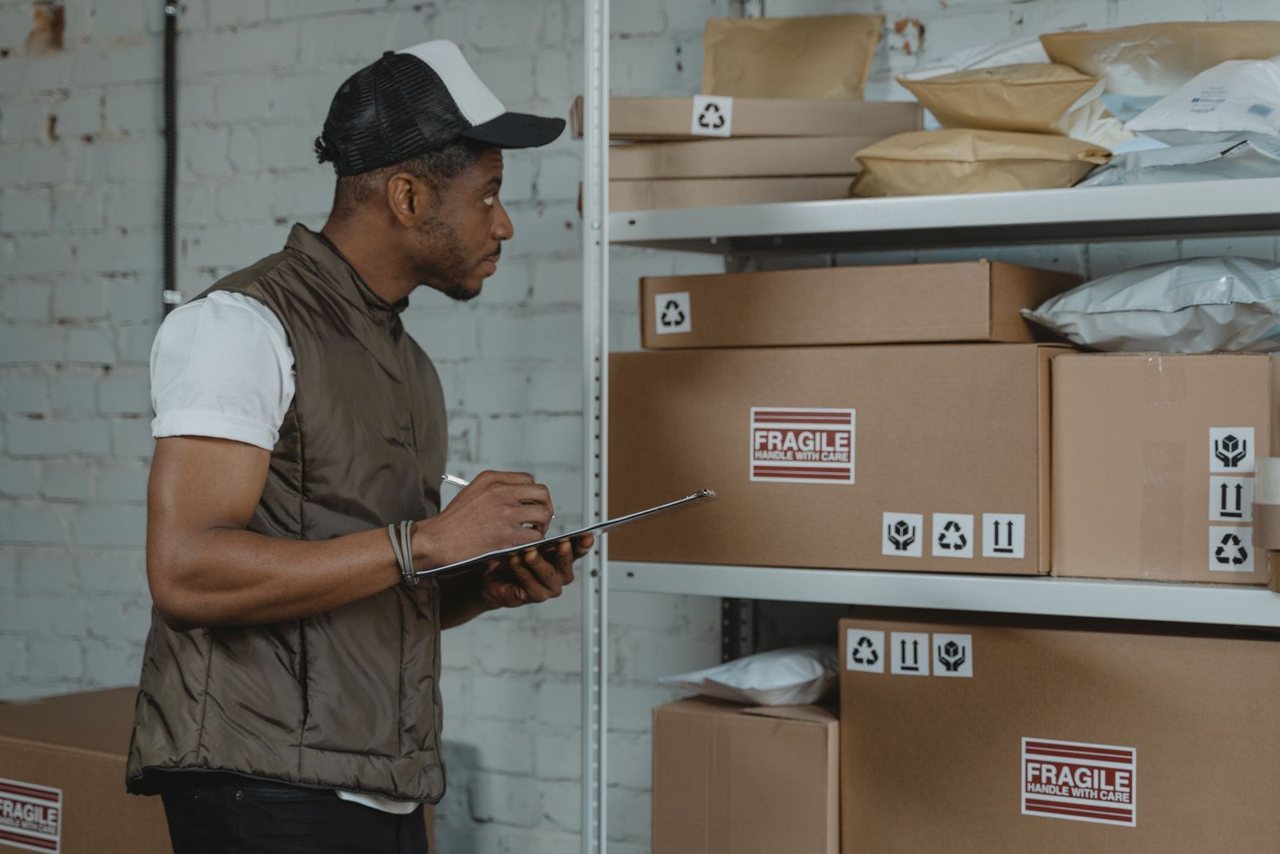
Evidence decays. Quarantine the shipment in a separate area labelled "HOLD — DISPUTED", photograph the cartons before opening them, then capture close-ups of each defect and a count of affected units. The strongest chain of custody shows the goods at container loading, at port arrival and at unpacking, with date stamps and the container seal number visible. Seal the cartons you do not open. A photo sent a week after unpacking is far weaker than one taken as the seal is broken.
Assemble the file in this order: the signed contract, proforma invoice, technical specification and quality annex; payment slips where the beneficiary name matches the contracting legal entity; a third-party inspection report from a recognised body; and full original chat logs from email, WhatsApp and the platform messenger — not screenshots of selected lines. An independent inspection report from a firm such as SGS, Bureau Veritas or QIMA typically costs USD 200-500 in China and is the single most persuasive document in a dispute because it is not your opinion.
Quantify the Loss in Money, Not Adjectives
"Poor quality" invites an argument. "600 of 4,000 units fail the agreed AQL 2.5 check; rework is USD 3.20 per unit plus USD 400 labour, so the claim is USD 2,320" invites a settlement. Attach the one-line calculation. Buyers who lead with a defect table tied to an accepted specification stop sounding like complainants and start sounding like counterparties enforcing terms.
Withhold the balance where the contract allows. The supplier's margin usually lives in the final payment, and small and mid-size Chinese factories run on thin working capital; a credible holdback often produces a faster settlement than a lawsuit that will take a year. Once the money is released, the incentive to cooperate goes with it.
Rung 3: Platform and Payment-Channel Leverage
If the order ran through Alibaba, open the Trade Assurance or dispute case inside the platform clock — a case opened a day late is often closed against you. Upload the inspection report on day one, state a specific refund amount and rationale, and answer mediator requests promptly; delays weaken the file. Alibaba can freeze a supplier's deposit or escrowed funds, but it is a platform intermediary, not a party to your sales contract, and it cannot seize a supplier's private bank accounts. Once funds have been released, that leverage disappears.
On domestic platforms such as 1688, platform intervention is triggered after the seller refuses. Reviewers look at objective evidence, not who sounds more aggrieved: complete chat screenshots showing refusal or non-response, order snapshots, shipping irregularities, and structured notes in a "date + event + request" format. Select the accurate reason code — a service-attitude dispute and a product-quality dispute follow different proof standards, and choosing the wrong track can make key evidence inadmissible.
If you paid by credit card or PayPal, a chargeback is a parallel and time-limited option: commonly 120 days from transaction (up to 540 for some cards) and 180 days for PayPal, with a 45-90 day process. It is effective when documented, but it can end the commercial relationship permanently. Treat it as a settlement lever for a supplier you are prepared to leave.
The Cost-Benefit Ladder: When to Stop Climbing
Every remedy has a cost floor. Walking away from a small claim is rational risk management, not failure. The thresholds below are working benchmarks from practitioner guidance, not legal advice; the decision always turns on whether the supplier has identifiable assets.
| Claim value | Realistic route | Indicative cost and time |
|---|---|---|
| Under USD 3,000 | Direct negotiation, platform case, card chargeback | Near-zero to low cost; days to weeks. Formal proceedings rarely economic. |
| USD 3,000-15,000 | Formal demand, platform dispute, mediation by PRC counsel | USD 200-800; roughly 30-60 days; materially better with an inspection report. |
| Above USD 15,000 | Arbitration or court claim, if the supplier has provable assets | Court USD 3,000-8,000 and 6-12 months; arbitration USD 5,000-15,000 in fees and 4-6 months. |
| Above USD 50,000 | Full case assessment, asset search, preservation before filing | Freeze accounts before funds move; enforcement can add another 3-6 months. |
A $30,000 court claim can cost $3,000-8,000 all-in including a Chinese lawyer at USD 150-300 per hour; even then, recovery rates of 50-60% are typical only where the counterparty actually holds assets. Spend USD 300-500 on a local counsel asset assessment before committing to a filing.
Rung 4: Mediation, Now With a 2026 Framework
Where direct talks stall but both sides want to keep trading, mediation is the cheapest structured rung. China's commercial mediation framework developed rapidly, and the State Council's Regulations on Commercial Mediation, effective 1 May 2026, created the first dedicated administrative framework for it. Bodies such as CCPIT and industry chambers offer low-cost processes; a well-documented claim can settle in 30-60 days for USD 200-800, with practitioner success rates around 40-50%.
Mediation is not escalation theatre. Go in with the same file you would show a tribunal, and settle only with a written agreement that names the amount, the payment date and what happens if the payment misses. An unenforced "we agreed in principle" is just another unanswered email.
Rung 5: Arbitration or Litigation — the Clause Decides
If there is a valid arbitration clause, court litigation is generally closed to you. If there is none, a claim in the supplier's local people's court is usually the available route. That single sentence in the contract is why it deserves more attention at signature than at dispute.
Chinese court litigation offers modest fees calculated as roughly 1-2% of claim value, direct enforceability against Chinese assets and fast pre-judgment asset preservation. Its weaknesses are language and procedure: proceedings are in Chinese, appeals add time, and foreign-related cases run longer. Forum matters too — the defendant's local court is normal in Shenzhen or Guangzhou, less comfortable in a small inland city where the supplier is the largest employer.

Arbitration through an institution such as CIETAC, SCIA or SHIAC gives you confidentiality, possible English or bilingual proceedings, trade-expert arbitrators and one final award with no appeal. That comes at higher cost on small claims, and a badly drafted clause — a non-existent institution, an ambiguous seat — can be held invalid and send you back to court anyway. Name the institution exactly, the seat city and the governing law.
What Changed in China's 2026 Arbitration Law
This is the genuinely new development for buyers drafting contracts now. China's revised Arbitration Law was passed on 12 September 2025 and took effect on 1 March 2026 — the first comprehensive revision since the law was enacted in 1994/1995. At eight chapters and 96 articles, it makes several changes that matter to foreign parties.
- Arbitration seat is introduced in law for the first time. Unless the parties agree otherwise, the seat determines the procedural law and the courts with supervisory jurisdiction — addressing long-standing uncertainty about an award's "nationality" under the New York Convention.
- Special (ad hoc) arbitration is recognised for foreign-related maritime disputes and for foreign-related disputes between enterprises registered in approved free-trade zones, Hainan and similar areas. China's first foreign-related ad hoc maritime award was reportedly made in Hainan on the law's first day in force.
- Pre-arbitration preservation and stronger court support for property, evidence and conduct preservation are written in, so urgent asset freezing no longer has to wait for a tribunal to exist. Emergency-arbitrator mechanisms at institutions such as Qingdao can appoint within one working day under new rules.
- Online arbitration is given the same legal effect as offline proceedings, the arbitrator pool is opened to qualified foreign professionals, and the window to apply to set aside an award is shortened from six months to three.
The practical takeaway: a China-seated clause is more internationally coherent than it was a year ago, and preservation is faster. But special arbitration remains geographically limited, so do not draft an ad hoc clause for an ordinary Yiwu goods contract without counsel confirming eligibility.
Enforceability: Where Can You Actually Collect?
An award is only as good as the assets behind it. China acceded to the 1958 New York Convention in 1987, with reciprocity and commercial reservations, and the Convention now has 170-plus parties. A China-seated CIETAC award is enforceable in China as a domestic award and abroad under the Convention; that avoids the foreign-judgment recognition problem entirely when the supplier's assets are onshore.
For a foreign arbitral award, the applicant goes to the intermediate people's court where the respondent is domiciled or its property sits. The court checks the narrow refusal grounds that track Article V of the Convention — invalid agreement, lack of notice, award beyond the submission, irregular procedure, award not binding, non-arbitrability or public policy — and does not retry the merits. Public policy is construed restrictively, and a lower court proposing to refuse enforcement must report upward through the Supreme People's Court internal mechanism, a structural reason awards have proved more predictable than judgments. Do not miss the two-year application window for recognition and enforcement.
Foreign court judgments are materially harder: recognition depends on a bilateral treaty or reciprocity, and many major jurisdictions have no commercial-judgment treaty with China. The Supreme People's Court has progressively liberalised the reciprocity test, and a mainland-Hong Kong reciprocal judgments arrangement took effect in 2024, but the route remains slower and more evidentially demanding. Hong Kong and Macau arbitration awards follow separate cross-border arrangements, not the New York Convention. Choose the forum by asking one question first: where is the money?
The Deadlines That Quietly Kill Claims
Quality claims fail on notice far more often than on evidence fabrication. Under Article 621 of the PRC Civil Code, if the contract sets an inspection period, the buyer must inspect and object inside it. If no period is set, the buyer must notify within a reasonable time and in any event within two years of receiving the goods. That two-year ceiling is an immutable period: it is not extended or suspended by the rules that apply to litigation limitation. Miss it and the goods are deemed to conform — the substantive right to object is extinguished, even if the general three-year contractual limitation period has not expired.
Draft the inspection window into the PO rather than relying on "reasonable". For formal proceedings, foreign evidence must be translated into Chinese by an approved translator; since the Hague Apostille Convention took effect for China on 7 November 2023, public documents from member states need an apostille rather than full consular legalisation. And if you are relying on the CISG, remember it requires proportionality: the supplier may have a right to repair, replace or reduce price before you terminate and demand a full refund. Respect the cure period or your own claim can fail.
Before You File: Is There Anything to Collect?
Run the same due diligence you would have run before the order. China Judgments Online (wenshu.court.gov.cn) publishes civil, commercial and enforcement judgments; the China Enforcement Information Publicity site (zxgk.court.gov.cn) lists "dishonest persons subject to enforcement" and consumption restrictions; the national registry (gsxt.gov.cn) and Credit China (creditchina.gov.cn) add penalties and credit events. Search the exact Chinese legal name or Unified Social Credit Code, not the English trading name, and distinguish roles: a company that is often the plaintiff is pursuing its own debts, while repeated defendant roles in debt, loan and quality cases are the warning sign. Data can lag by months, so treat it as one input.
Check ownership as well. The Alibaba seller account, the invoice issuer, the manufacturer and the payment beneficiary may be different entities, and a trading company may only rent production capacity without owning the plant. If the conduct is more than breach — full payment collected, a fraction passed to the factory, months of false shipment reports — a police complaint may be appropriate because investigators can find and preserve assets that a private plaintiff cannot. It is not a cheap debt-collection tool, and police may treat a failed deal as a civil matter, so get local counsel's view on the evidentiary threshold first.
Prevention Beats Recovery
The cheapest dispute is the one the contract prevents. Tie the balance payment to a passed third-party pre-shipment inspection and a timestamped photo log. Keep a signed, sealed golden sample. Stagger shipments and hold backup stock at a China hub so a failed lot does not stop your season. Record every outcome in a supplier scorecard — the factory that paid a small claim without argument may stay approved with tighter specs; the one that vanished after a large loss should be out.
- Name the dispute forum precisely: exact institution or court, seat city, governing law, Chinese-language version control.
- Attach a product requirement annex with tolerances, standards, packaging and the signed golden-sample reference.
- Write an inspection period and notification method into the PO; do not rely on the Civil Code "reasonable" default.
- Make the balance payment conditional on a passed inspection report and photo log, and keep a genuine holdback until acceptance.
- Re-check litigation, enforcement and registry records every three to six months, not only when trouble starts.
References
- Red Flag Solutions, "Supplier Disputes in China: Litigation or CIETAC Arbitration?" — court fees, asset freezing, forum choice and New York Convention reach.
- Lyu & Associates, "Yiwu Private Label Supplier Dispute: What Can Foreign Buyers Do?" and "Alibaba Supplier Refuses to Refund" — four pathways, Civil Code Article 621, Apostille, criminal complaint, recoverability thresholds.
- China Business Lawyer, "Alibaba Supplier Dispute: When Platform Remedies Are Not Enough" — preserving the platform file and separating platform payments from direct transfers.
- Soley B2B, "How to Get a Refund from a Chinese Supplier" — cost and timeline benchmarks for litigation, arbitration, mediation and chargebacks.
- China ISPP, "How Do You Dispute a Chinese Supplier Payment When Goods Arrive Defective?" — quarantine, chain of custody, quantified loss and holdback leverage.
- National People's Congress, "Advancing high-quality development of arbitration" (1 March 2026); Ministry of Justice, maritime arbitration under the revised law; Jiayuguan municipal government, summary of the new Arbitration Law (96 articles).
- Nanjing Maritime Court, judicial review of recognition and enforcement of foreign arbitral awards; Global Law Experts, cross-border enforcement in China 2026.
- Wuxi Xishan People's Court, Civil Code Article 621 explained; Qinghai Department of Justice, inspection periods and quality retention.
- Tianni Law, "How to Check a Chinese Supplier's Litigation and Court Records"; GBA IP Lawyer, 2026 supplier due-diligence platform guide.
- China International Economic and Trade Arbitration Commission (CIETAC), official site; 1688 platform, platform-intervention guide.


