
FCL vs LCL: The 15 CBM Break-Even Every Importer Should Know
FCL vs LCL: The 15 CBM Break-Even Every Importer Should Know
FCL vs LCL shipping is one arithmetic problem: break-even CBM equals your all-in container cost divided by your all-in LCL cost per CBM. Run on 2026 China to US West Coast numbers, a 20ft at roughly $3,325 in container-specific charges against LCL at about $205 per delivered CBM crosses over at 16.2 CBM. That is where the 15 CBM rule of thumb comes from. Below 14 CBM, LCL wins almost every time and you do not need the calculator.
FCL vs LCL Shipping: The Only Formula That Matters
Full Container Load means you buy the box. You pay one flat price whether it leaves China holding 8 CBM or 28 CBM. Less than Container Load means you buy space inside someone else's box, priced per cubic metre, with a one CBM minimum and a consolidation and deconsolidation step at each end. Everything else about FCL vs LCL shipping - transit time, damage risk, customs exposure - follows from that single structural difference.
The formula is short. Break-even CBM equals total container-specific FCL charges divided by the all-in LCL cost per CBM. Costs that appear identically on both quotes (documentation, ISF filing, customs brokerage, duty) cancel out and should be excluded from the calculation, or you will distort the answer. The reason importers get contradictory advice on this question is almost always that they are dividing different things.
The one line to put in your spreadsheet
Break-even CBM = (ocean freight + origin THC + destination THC + VGM and seal + drayage) / (LCL ocean per CBM + origin CFS per CBM + destination CFS per CBM). Everything common to both quotes stays out. If you want us to run it on your actual lane and packing list, send the dimensions.
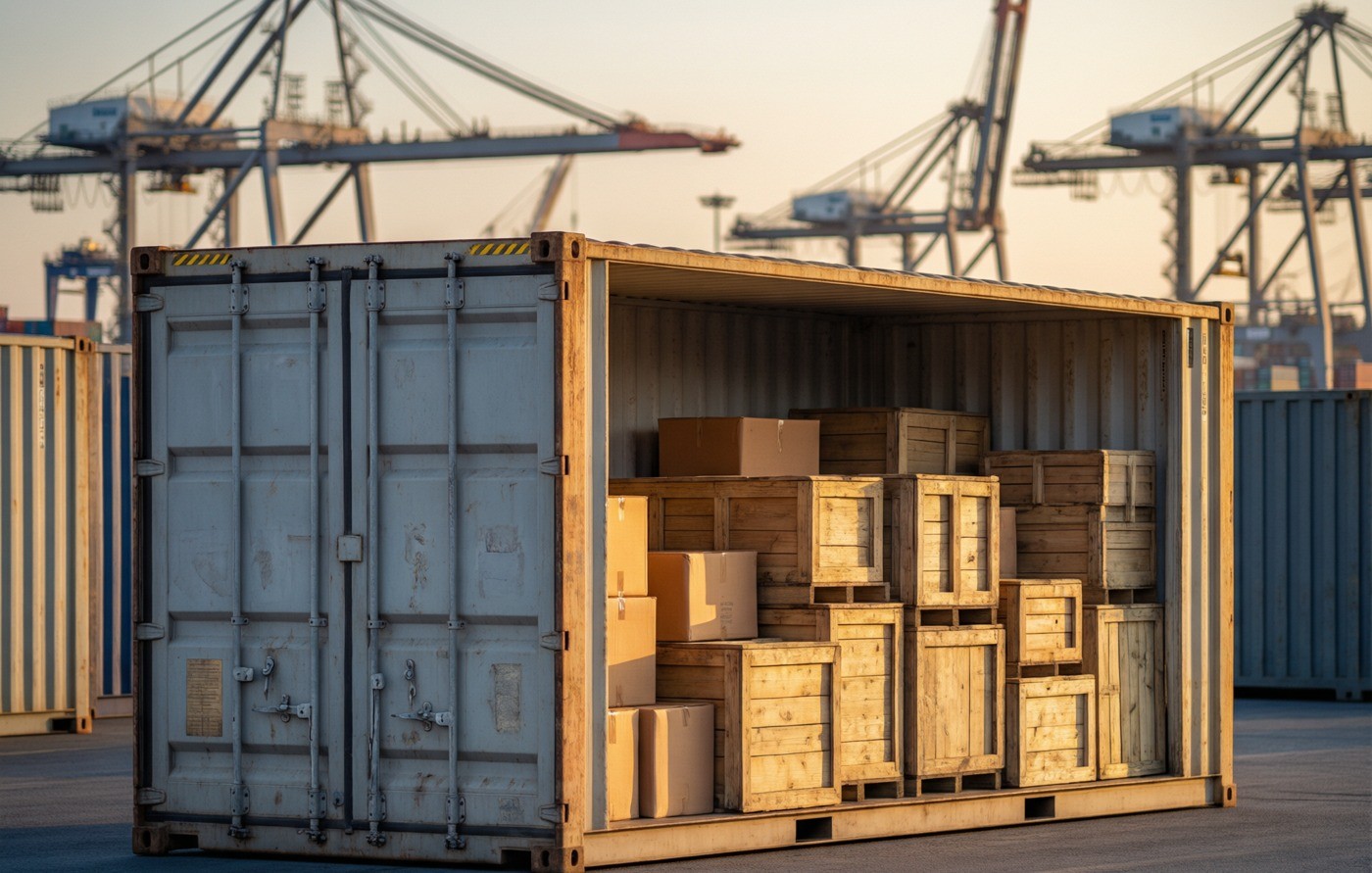
The Two Cost Structures, Line by Line
Ocean freight is the number both quotes lead with and the number that decides the least. The charges below are the 2026 China to US ranges published in forwarder rate schedules as of June 2026, and the destination side is where LCL quietly loses its advantage.
| Charge | FCL (per container) | LCL (per CBM unless stated) |
|---|---|---|
| Ocean freight | 20GP $1,800-$2,800; 40HQ $2,800-$4,200 | $80-$250 depending on lane |
| Origin handling | Origin THC $120-$250 | Origin CFS handling $25-$50 |
| Destination handling | Destination THC $200-$400 | Destination CFS handling $60-$120 |
| VGM and seal | $20-$40 plus $10-$20 | Not applicable |
| Drayage to warehouse | $300-$800 within 50 miles of port | Charged per shipment by the CFS |
| Documentation, ISF, brokerage | $50-$100, $30-$50, $150-$350 | Identical - cancels out of the comparison |
Note the asymmetry. FCL destination cost is a fixed $200-$400 regardless of volume. LCL destination cost is $60-$120 for every single cubic metre, and it is charged after the goods land, which is why it so often fails to appear in the quote that won the booking. On a 20 CBM LCL shipment that single line runs $1,200-$2,400. It is the largest reason a cheap-looking LCL rate turns into an expensive shipment.
Worked Math: Ningbo to Los Angeles at 16 CBM
Mid-season 2026 rates, mid-range on every line, no favourable assumptions on either side. First the LCL column, built from components rather than taken from a single all-in figure.
- LCL ocean freight: $80 per CBM (the low end of the $80-$250 published band, because US West Coast is the cheapest major lane).
- Origin CFS handling: $35 per CBM, mid-range of $25-$50.
- Destination CFS handling: $90 per CBM, mid-range of $60-$120.
- All-in LCL variable cost: $205 per CBM. At 16 CBM that is $3,280.
Now the 20ft container, counting only charges the container itself creates: ocean freight $2,300, origin THC $180, destination THC $300, VGM and seal $45, drayage to warehouse $500. Total container-specific charges: $3,325. Divide by $205 and the break-even lands at 16.2 CBM. At exactly 16 CBM the two options are within about $45 of each other, which is inside the noise of any real quotation.
The practical reading: at 16 CBM you should take the container, because the container also buys you a shorter transit, no shared-container customs exposure and no deconsolidation handling. When the money is level, the non-price differences decide. Below about 14 CBM there is no argument to have - LCL is cheaper by a margin no service benefit closes.
Why the Break-Even Barely Moves With the Market
This surprises people. Ocean rates on this lane swung from roughly $2,400 to $4,800 for a 40HQ across the 2026 seasons, and LCL on the same lane moved from about $65 to $130 per CBM. Both sides moved. The ratio between them did not move much, because the same fuel, capacity and congestion pressures price into both products.
- Low season: LCL at about $175 all-in per CBM against roughly $2,825 in container charges gives a break-even near 16.1 CBM.
- Mid season: $205 per CBM against $3,325 gives 16.2 CBM.
- Peak season: about $245 per CBM against roughly $4,225 gives 17.2 CBM.
A one CBM drift across the whole year. That is why the 15 CBM rule of thumb has survived several very volatile freight markets while the underlying rates changed by 100%. What does move the break-even sharply is lane, not season: on US East Coast services LCL per CBM runs $110 to $200 while the box premium is smaller in proportion, which pulls the crossover down. Rerun it per lane, not per quarter.
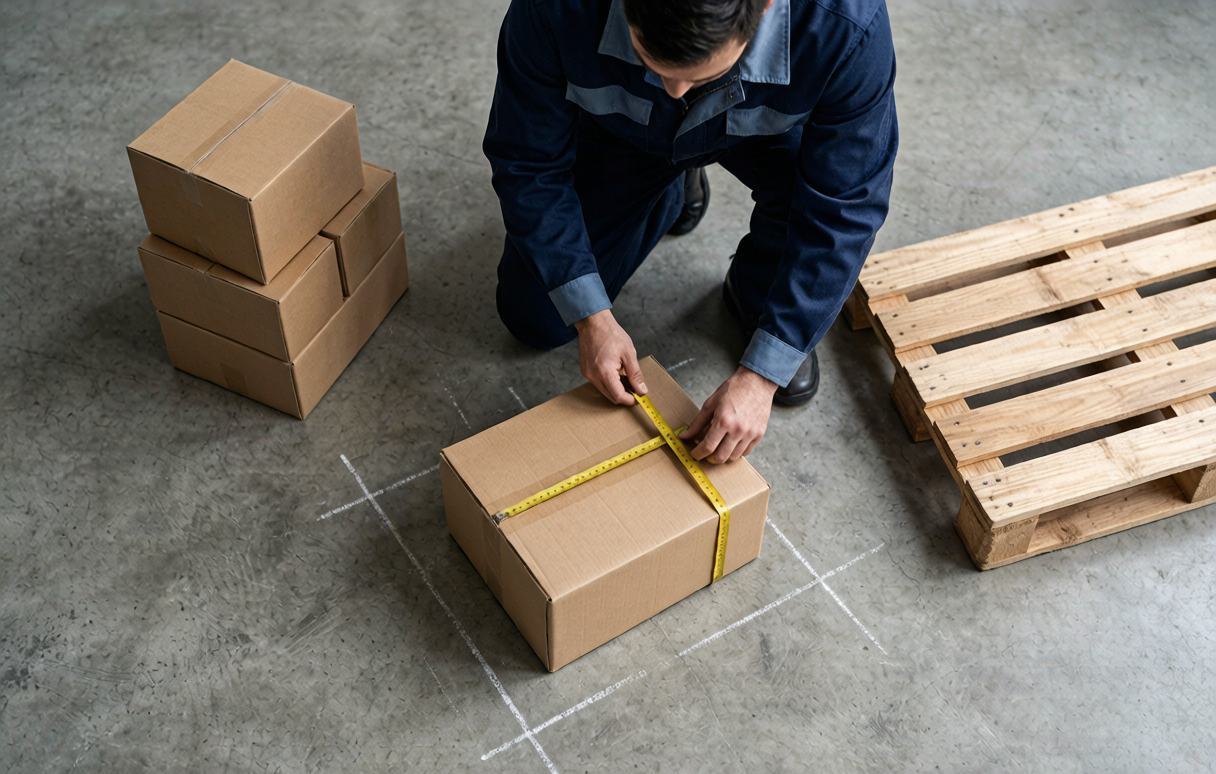
Why Published Break-Evens Range From 15 to 36 CBM
Search this question and you will find 14-18 CBM, 15-20 CBM, and 33-36 CBM all presented confidently. All three can be correct, because they are dividing different numerators by different denominators. The difference is entirely about which charges each analysis counts.
| What the analysis counts | Break-even it produces | When to use it |
|---|---|---|
| Ocean freight only, against a 40HQ | 33-36 CBM | Almost never - it ignores the destination CFS charge that dominates LCL |
| Ocean plus handling, against a 20GP | 14-20 CBM | The realistic default for port-to-warehouse comparisons |
| Full delivered cost including CFS and drayage | 14-17 CBM | The correct basis if you are comparing two door-delivered quotes |
| Delivered cost on a high-CFS destination | Under 14 CBM | Ports with expensive deconsolidation, or any DG or oversize cargo |
So treat 15 CBM as the trigger, not the answer. Under 15 CBM, book LCL and stop thinking about it. Over 15 CBM, spend twenty minutes running your own numbers, because the honest range on a real lane is wide enough that a rule of thumb will cost you money in one direction or the other. Our freight team runs this per shipment rather than per client for exactly that reason.
Fifteen cubic metres is not the answer. It is the point at which guessing stops being free.
The 40ft Crossover Sits Nearer 21 CBM
A 40HQ is not twice the price of a 20GP, which catches out importers who assume the break-even doubles. On mid-season 2026 numbers a 40HQ at $3,200 ocean plus $220 origin THC, $350 destination THC, $45 VGM and seal and $500 drayage totals about $4,315 in container-specific charges. Against $205 per CBM that crosses at 21 CBM.
The practical consequence is a dead zone. A 20GP tops out around 28 CBM of real loaded volume against a 33.2 CBM internal cube, because pallets and carton geometry never fill a box perfectly. So between 21 and 28 CBM both containers beat LCL, and you choose on payload and packing efficiency rather than on freight cost. Above 28 CBM the 20ft simply cannot take the cargo and the 40HQ, with roughly 68 CBM of practical capacity against a 76.4 CBM cube, is the only single-box option.
Below 1 CBM, Air Quietly Wins
LCL bills a one CBM minimum, which means a 0.5 CBM shipment pays for a full cubic metre and still carries every fixed cost of an ocean entry. That is where the sea-freight advantage collapses, and the comparison is worth doing properly because the intuition that sea is always cheaper is wrong at this size.
| 0.5 CBM, 60 kg, Ningbo to Los Angeles | Chargeable basis | Indicative 2026 cost | Door transit |
|---|---|---|---|
| LCL ocean | 1 CBM minimum applies | About $205 freight plus roughly $365 in documentation, ISF and brokerage | 30-38 days |
| Standard air freight | 0.5 CBM x 167 kg = 84 kg chargeable (divisor 6,000) | About $420 at $5 per kg, plus fuel and security surcharges | 5-7 days airport to airport |
| Express courier | 0.5 CBM x 200 kg = 100 kg chargeable (divisor 5,000) | About $800 at $8 per kg, customs clearance included | 3-5 days door to door |
Read the totals rather than the rates. LCL lands near $570 all-in and takes five to six weeks. Standard air lands in the same neighbourhood once surcharges are added and arrives a month earlier. Express costs more but includes clearance and needs no broker relationship, which for a first shipment is often worth the difference on its own. The threshold in practice: under 1 CBM, price air before you price ocean. Between 1 and 2 CBM, ocean regains the advantage quickly unless the goods are dense and valuable.
Do not forget the ISF clock
The US Importer Security Filing must be lodged 24 hours before the vessel loads, and a failure carries a $5,000 penalty. On LCL the cut-off is effectively earlier, because your cargo enters the CFS days before the container it will travel in is even nominated.
The Volume Decision Matrix
| Shipment volume | Mode | Why |
|---|---|---|
| Under 1 CBM | Air or express courier | LCL minimum billing plus fixed entry costs erase the ocean saving; air arrives 25-30 days sooner for similar money |
| 1-6 CBM | LCL | Cheapest by a wide margin, typically 30-40% under any container option |
| 6-14 CBM | LCL | Still 10-20% cheaper; not worth paying for empty container space |
| 14-18 CBM | Run the calculation | Genuinely close. Destination CFS charges and delivery terms decide it, not the ocean rate |
| 18-28 CBM | 20ft FCL | Container wins on cost and on transit; 28 CBM is the practical loading ceiling |
| 28-68 CBM | 40ft high cube | The only single-box option above a 20ft ceiling; per-CBM cost drops sharply as you fill it |
| Over 68 CBM | Multiple 40HQ | Split by weight distribution, and keep dense and light cargo in separate boxes |
One caveat that overrides the whole table: weight. A 20ft is limited to roughly 21 to 22 tonnes of payload, so dense cargo hits the weight ceiling long before the volume ceiling. If your product is hardware, ceramics or anything liquid-filled, calculate against the payload limit first and treat CBM as the secondary constraint.
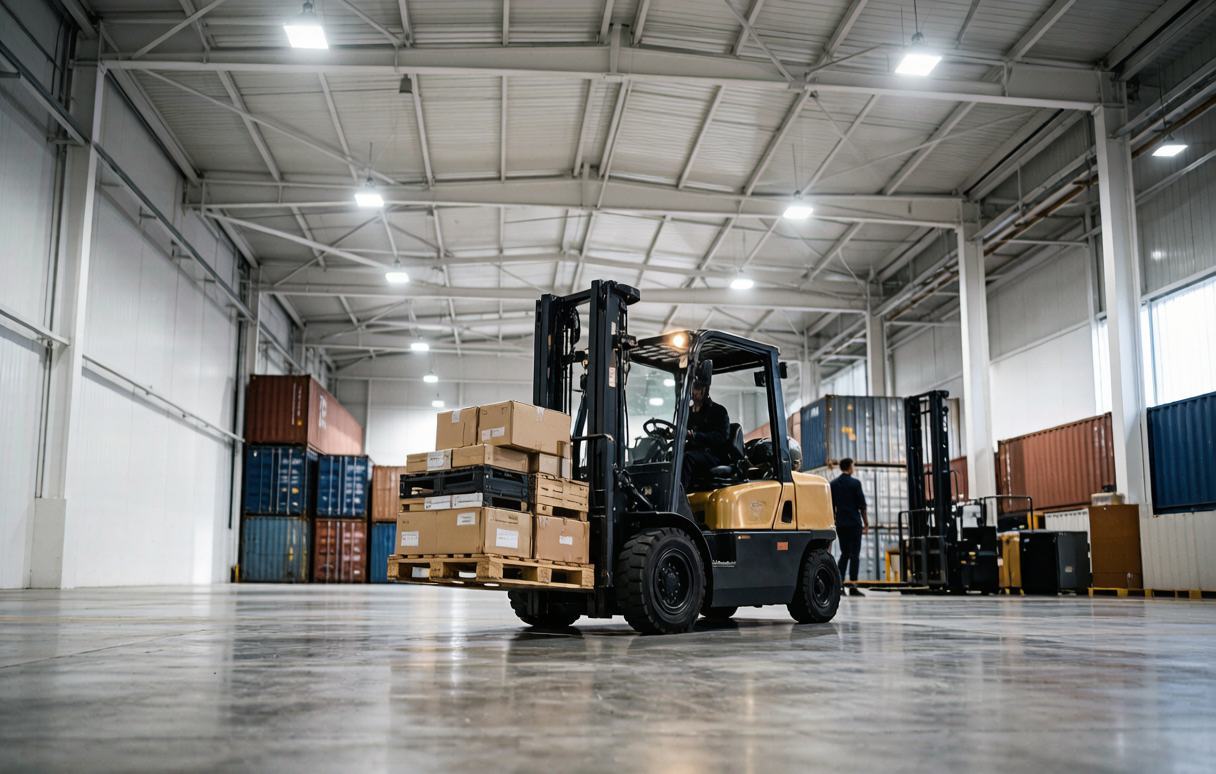
Consolidation: Buying Your Way Across the Line
If you sit in the 8-14 CBM band repeatedly, the highest-value move is not renegotiating your LCL rate. It is combining orders until you cross the break-even, because the saving on the other side of 16 CBM is structural rather than negotiated. Three levers do it.
Combine suppliers into one booking
Six suppliers shipping 2-3 CBM each individually are six LCL entries with six sets of handling. Consolidated at one warehouse they are one container and one customs entry.
Shift the calendar, not the cargo
Pulling a reorder two weeks forward or holding it two weeks back to merge with the next production run is usually cheaper than paying LCL destination charges twice.
Re-carton before you measure
Booth and factory display cartons are sized for retail presentation, not for cube efficiency. Repacking to export cartons is the cheapest CBM reduction available.
There is a hard geographic fact behind the third lever. Yiwu sits about 250 km from Ningbo Beilun port, three to four hours by truck, and that drayage is quoted per container rather than per cubic metre. An 18 CBM box and a 28 CBM box cost exactly the same to truck to the quay. Every empty cubic metre inside a 20ft is therefore paid for twice, once in the ocean freight and once in the trucking, which is why we push hard on packing density before we accept an FCL booking. Buyers running multi-supplier orders through the Yiwu market gain more from consolidation than from any freight rate they will ever be quoted.
What the CBM on Your Packing List Gets Wrong
Almost every FCL vs LCL shipping decision is made on a CBM figure supplied by the seller, and in our experience that figure is optimistic in one direction and pessimistic in the other. Booth goods in Yiwu arrive at our consolidation warehouse in the booth's own display cartons, frequently part-filled and heavily over-sized. When we re-carton for export we typically remove 8-12% of the declared volume, and that is a practitioner figure from our own intake records rather than a published statistic. On a shipment quoted at 17 CBM that is enough to drop it back under the trigger, or more usefully, to fit a 30 CBM order into a single 20ft.
The second correction is category. Yiwu International Trade City is laid out by district, and the districts behave completely differently on freight. District 2 hardware and small electricals are dense: a container of it reaches the payload limit somewhere around 15-18 CBM and the remaining space is unusable. District 1 artificial flowers and toys are almost pure air, so the same box fills to 28 CBM and weighs very little. Mixing the two deliberately is the oldest trick in Yiwu consolidation and it is genuinely the most efficient thing a multi-category buyer can do with a container. RND Sourcing plans loading order by density before we plan it by supplier, and it routinely saves a partial second box.
Frequently Asked Questions About the FCL vs LCL Break-Even
At exactly what CBM should I switch from LCL to FCL?
On mid-2026 China to US West Coast numbers, 16.2 CBM against a 20ft. Treat 15 CBM as the point where you stop defaulting to LCL and run the calculation on your own lane, since published crossovers range from 14 to 20 CBM depending on which destination charges are counted.
Why do some sources say the break-even is over 30 CBM?
Because they compare ocean freight only, and usually against a 40HQ. That method ignores destination CFS handling at $60-$120 per CBM, which is the single largest LCL cost line and the one that decides the answer.
Is FCL worth taking if the container will not be full?
Often yes above about 18 CBM. You are buying transit time, a single customs entry and no shared-container hold risk alongside the freight, and drayage costs the same whether the box is two-thirds or fully loaded.
What is the minimum volume for LCL?
One CBM on almost every service, and you are billed for a full CBM below that. For shipments under 1 CBM, price standard air and express courier first - they are usually within a couple of hundred dollars and arrive around a month earlier.
How much longer does LCL take than FCL?
Typically 3-7 days on the water-to-door total, made up of 2-5 days of consolidation waiting at origin and 2-5 days of deconsolidation at destination. In peak season that gap widens because CFS facilities back up.
The break-even is not a fact about shipping. It is a fact about your lane, your season and your packing density, and all three are things you can change. If you want the calculation run on real numbers rather than a rule of thumb, send us your carton dimensions, quantities and destination port through the inquiry form and we will show the working both ways, including what re-cartoning would do to the answer. Our other freight notes are collected at yourchinagent.com.


