
Fashion and Beauty Product Sourcing: Navigating Regulations and Trends
Fashion and Beauty Product Sourcing: Navigating Regulations and Trends
Fashion and beauty are among the fastest-moving consumer categories, where trends, formulations, and regulations shift constantly. For U.S.-bound products, the FDA's MoCRA is the most significant cosmetics reform since 1938, with facility registration and product listing enforced since July 1, 2024, and over 9,500 facilities and 589,000 product listings active by January 2025 (Tecex, 2025). Sourcing from China demands both speed and compliance discipline. Explore options on our products list.
The Fast-Moving Fashion & Beauty Market
Beauty and personal care reward brands that launch quickly and refresh often. China, especially the Guangzhou region, is a global hub for cosmetics OEM and ODM manufacturing, offering low minimums and fast turnaround for private-label lines. The trade-off is a crowded supplier field where compliance maturity varies widely, making factory vetting as important as the formula itself.
Speed vs safety
A fast launch means nothing if a shipment is refused at customs. Build compliance into the timeline from day one, not as an afterthought.

Makeup and Cosmetic Product Categories
The category spans skincare, color cosmetics (lipstick, foundation, eyeshadow), haircare, fragrances, and personal-care items like soaps and serums. Each has different formulation complexity and regulatory exposure. Skincare and serums often carry active claims that can cross into drug territory in the US, so defining the product's legal category early prevents costly rework.
- Skincare: creams, serums, cleansers, the largest and most formula-driven segment.
- Color cosmetics: lipstick, foundation, eyeshadow, packaging-intensive.
- Haircare and fragrance: shampoos, conditioners, perfumes.
- Personal care: soaps, wipes, and bath products with milder compliance needs.
Regulatory Compliance: FDA, EU Cosmetics Regulation
For the US, MoCRA requires facility registration (renewed every two years), product listing per SKU, serious adverse-event reporting within 15 business days, and safety substantiation for every product (FDA, 2024-2025). For the EU, the Cosmetics Regulation EC 1223/2009 mandates a Responsible Person, CPNP notification, a Product Information File, and ISO 22716 GMP. A foreign facility also needs a U.S. agent. Missing any of these blocks market entry.
| Requirement | United States (MoCRA) | European Union (EC 1223/2009) |
|---|---|---|
| Facility | Registration + US agent | GMP under ISO 22716 |
| Product | Listing per SKU | CPNP notification + PIF |
| Safety | Safety substantiation | Safety assessment by qualified person |
| Reporting | 15-day serious AE reports | CPNP + poison-center data |
Ingredients and Safety Standards
Ingredient rules are tightening on both sides of the Atlantic. The EU banned 22 newly classified CMR substances with no transition period from September 1, 2025 under Omnibus VII, with further restrictions (Omnibus VIII) applying from May 2026 (Tecex, 2026). Several U.S. states, including California, Minnesota, and Washington, also ban intentionally added PFAS in cosmetics from 2025. Your formula must be screened against the destination's banned and restricted lists.
Screen early
Run the full ingredient list against current FDA and EU Annex restrictions before production. Reformulating after a failed customs check is slow and expensive.
Packaging Design and Branding
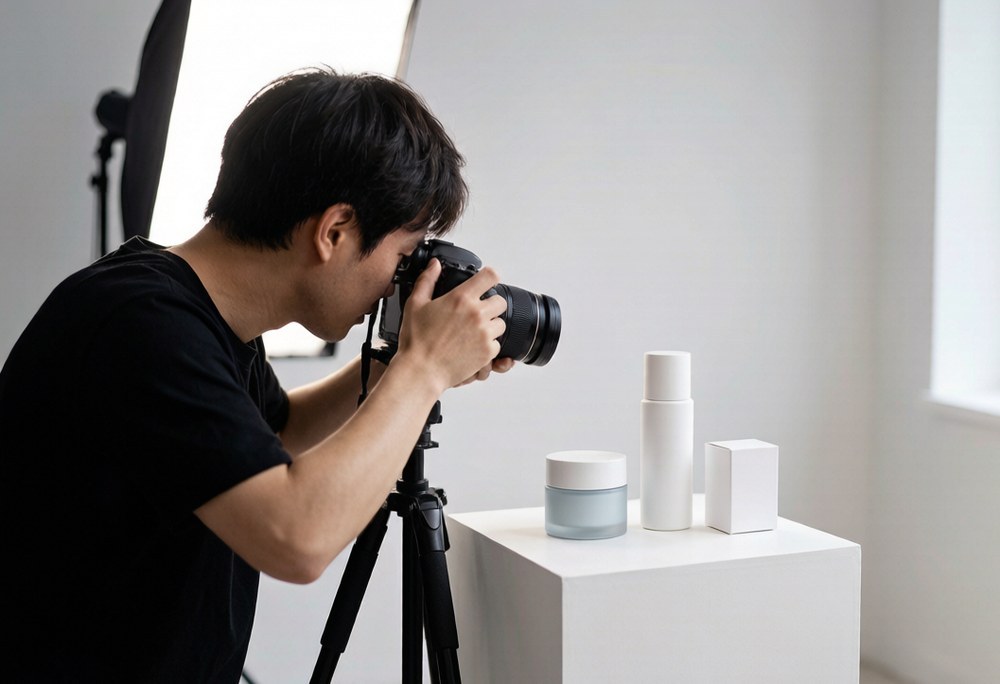
Beauty lives on shelf appeal, so packaging and labeling are part of the product, not an afterthought. Beyond aesthetics, labels must carry the legally required information: U.S. labels need a domestic contact and ingredient declaration; EU labels need the Responsible Person, batch number, and period-after-opening. Sustainable and refillable packaging is a rising differentiator, but claims must be substantiated to avoid greenwashing risk.
- Label compliance: contact details, ingredients, and batch data per market.
- Sustainable packaging: a selling point only if claims are truthful.
- Unboxing experience: drives social sharing and repeat purchase.
- Material safety: avoid banned substances in inks and coatings too.
Finding Cosmetic Manufacturers in China
Guangzhou and the Pearl River Delta host thousands of cosmetics factories, but capability and compliance maturity differ sharply. Look for ISO 22716 GMP certification, export experience to your target market, and a willingness to share formulation and testing documentation. Avoid factories that refuse to disclose full ingredient INCI names or cannot provide a compliant label template. A verified audit is essential.
Shortlist certified factories
Prioritize ISO 22716 and proven export history.
Audit and sample
Verify license, hygiene, and a physical golden sample.
Screen the formula
Check every ingredient against destination restrictions.
Confirm documentation
Lock labeling, PIF or listing, and test reports.
Quality Testing for Beauty Products
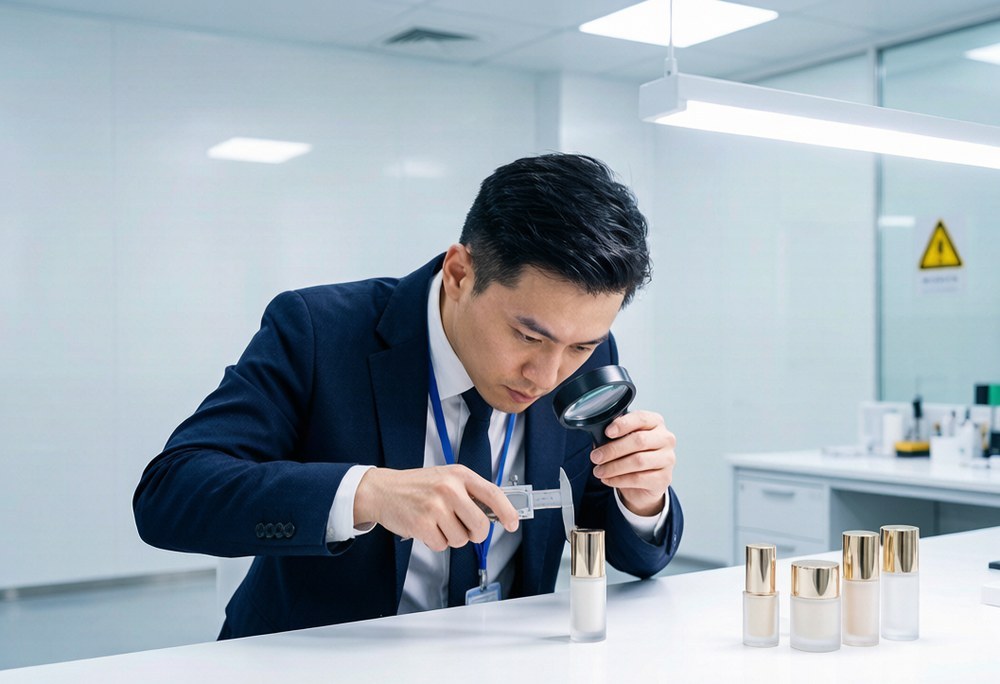
Beauty products need more than a good smell. Microbiology tests (total plate count, pathogens), stability and accelerated-aging tests, heavy-metal screening, and preservative-efficacy tests are standard for export-grade cosmetics. RND coordinates independent laboratory testing and verifies certificates before shipment, so a contaminated or unstable batch never reaches your customers or triggers a recall.
Test, don't trust
Request third-party lab reports for microbiology and heavy metals, and keep them on file. They are your evidence if a regulatory question arises. Send us your brief to start.
RND's Beauty & Personal Care Sourcing
RND Sourcing has spent 20+ years building a vetted network of Guangdong and Zhejiang beauty manufacturers, and we manage the full compliance chain: factory audit, formula screening, labeling, and independent lab testing. Our transparent fixed-fee model means no supplier kickbacks, so we optimize for a safe, legal, market-ready product. Learn more on our about page.
End-to-end
From formula to finished, tested, compliant goods, we keep your beauty line both fast to market and defensible if challenged.
Conclusion
Sourcing fashion and beauty products from China is a balance of trend speed and regulatory rigor. With the right manufacturer and disciplined testing, you can launch quickly without compliance surprises. When you are ready, send us your product idea and our team will build a compliant sourcing and testing plan.
What does FDA MoCRA require for cosmetics?
MoCRA requires facility registration, product listing per SKU, safety substantiation, and 15-business-day reporting of serious adverse events, enforced since July 2024.
What EU rules apply to imported cosmetics?
The EU Cosmetics Regulation EC 1223/2009 requires a Responsible Person, CPNP notification, a Product Information File, and ISO 22716 GMP compliance.
Which Chinese region leads cosmetics manufacturing?
Guangzhou and the Pearl River Delta are the dominant hubs, offering extensive OEM and ODM private-label capacity with fast turnaround.
What tests should beauty products pass before export?
Standard export tests include microbiology, stability and accelerated aging, heavy-metal screening, and preservative-efficacy, verified by independent labs.
How does RND keep beauty sourcing compliant?
RND audits factories, screens formulas against FDA and EU restrictions, verifies labeling, and coordinates third-party lab testing, with no supplier commissions.
Beauty sourcing succeeds when compliance and creativity move together. Contact our team to turn your formula into a compliant, market-ready product from China.
Work With RND Sourcing
RND Sourcing is your on-the-ground sourcing team in Yiwu, helping global buyers find reliable factories, negotiate better terms, and ship with confidence. For a free, no-obligation consultation, visit yourchinagent.com.


