
How do I source solar generators and portable power stations from China?
Short Answer: Use Verified Battery Factories, Confirm UN38.3 Plus CE / FCC / RoHS, Test Real Capacity at Inspection, and Ship With a Forwarder Who Handles Class 9 Dangerous Goods
Portable power stations and solar generators are high-value, certification-heavy electronics, so the sourcing discipline has to be tighter than for general merchandise. Five things matter. Use verified factories with genuine lithium-battery experience rather than trading companies. Confirm the certifications: UN38.3 is mandatory for battery transport, and you will also need CE, FCC or RoHS depending on your market. Request a pre-production sample and run a pre-shipment inspection that includes function and battery-capacity testing with a wattmeter and a measured run-time, not just a visual check. Ship through a forwarder experienced with lithium-battery Class 9 dangerous goods rules, because packaging and declaration requirements are strict and errors ground shipments. Finally, watch for inflated battery ratings - a stated capacity means nothing until you have measured it against the test report. Inspect before paying; battery defects are a safety issue, not a quality issue.
This Is Not a Yiwu Booth Purchase
Portable power sits at the opposite end of the sourcing spectrum from small commodities. The unit value is high, the certification chain is mandatory rather than advisory, and a defect is a safety event rather than a customer-service issue. That combination rules out buying from a trading company that cannot answer a question about cell chemistry.
Insist on the factory. Ask which cells they use, who supplies the BMS, and what their UN38.3 report covers - a real manufacturer answers in minutes.
The Certification Chain You Cannot Skip
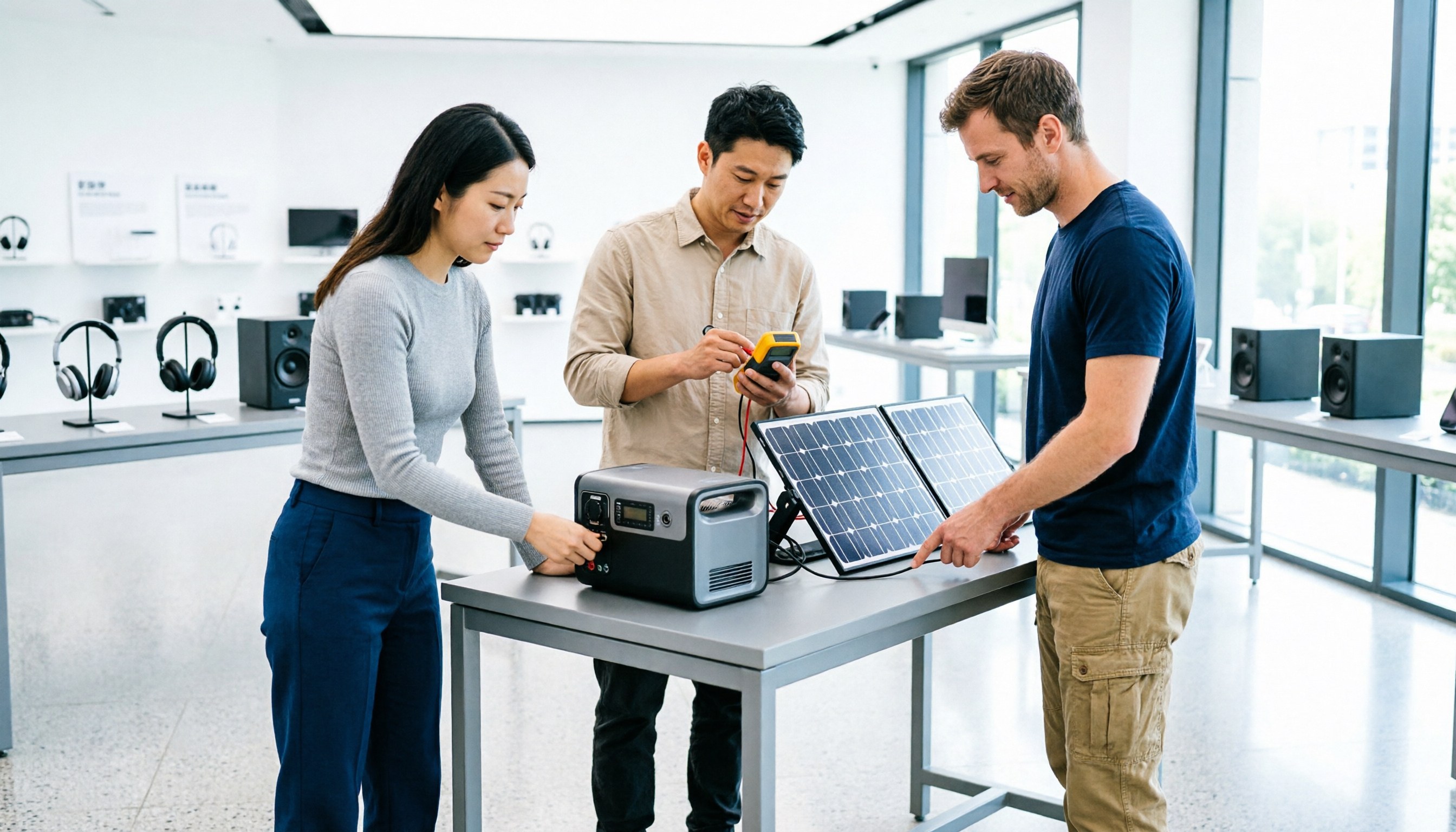
UN38.3 is the transport safety test for lithium batteries and it is not optional - no compliant forwarder will accept the goods without it. Market certifications sit on top of that depending on where the unit lands.
| Requirement | Purpose | Applies to |
|---|---|---|
| UN38.3 | Lithium battery transport safety | All markets, mandatory |
| MSDS / SDS | Dangerous goods declaration | All air and sea DG bookings |
| CE | EU health and safety | European Economic Area |
| FCC | US radio and emissions | United States |
| RoHS | Restricted substances | EU and increasingly elsewhere |
Ask for the UN38.3 report on the exact cell and pack configuration you are buying.
Verify Capacity Physically, Not on the Label
Inflated capacity claims are the single most common problem in this category. A unit badged at a given watt-hour rating may deliver materially less under load, and the only way to know is to measure it.
Agree the test protocol before production
Load, ambient temperature, cut-off.
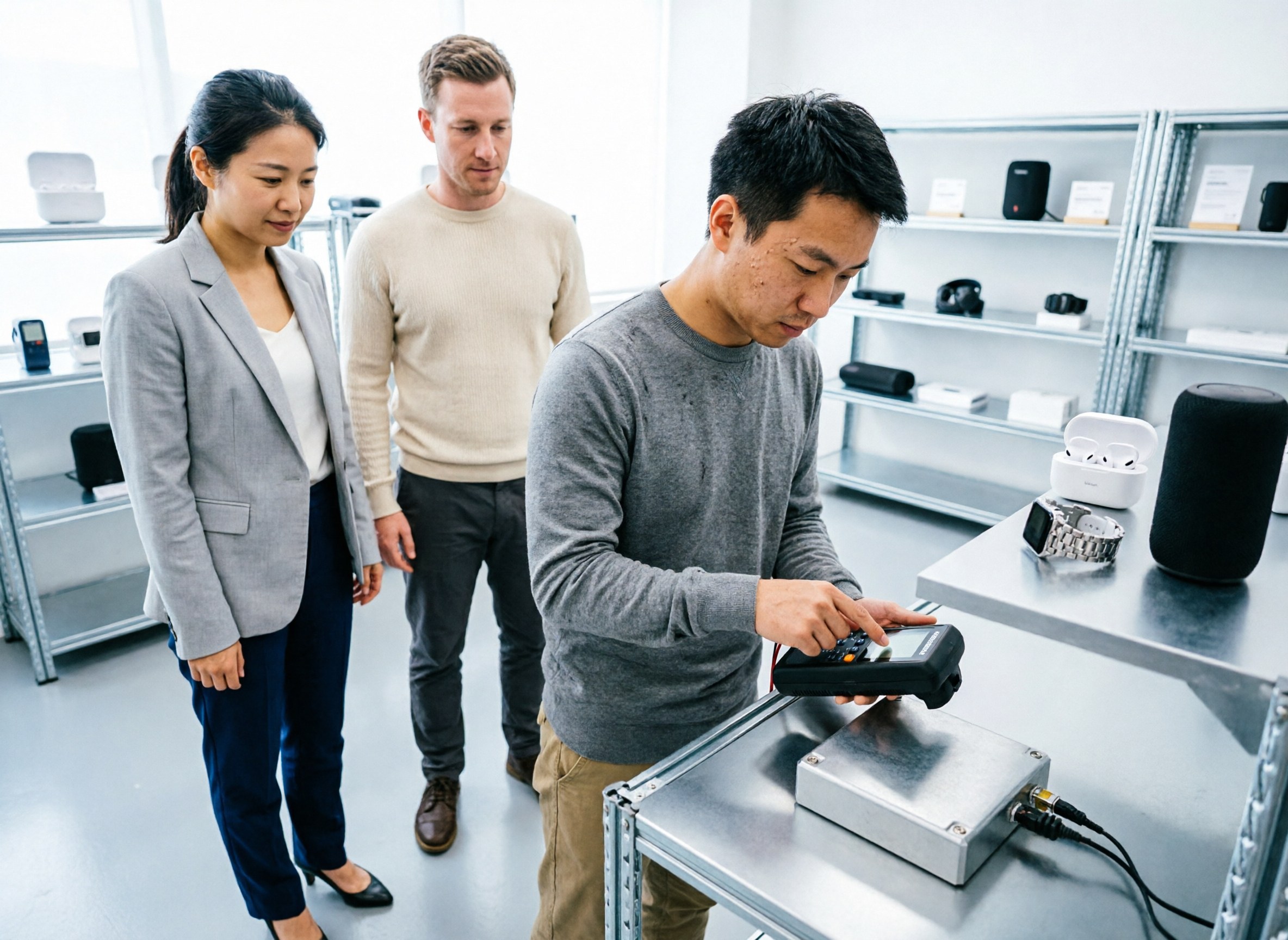
Bring a wattmeter to inspection
Not a visual check.
Run a measured discharge test
Record actual delivered watt-hours.
Compare against the rating and report
Tolerance agreed in the PI.
Test the charge cycle too
Solar input and AC input both.
Fail the lot on a material shortfall
This is a safety-adjacent spec.
Shipping Lithium: Class 9 Dangerous Goods
Batteries ship as Class 9 dangerous goods. Packaging, labelling and declaration rules are strict, carrier acceptance varies, and a wrongly declared shipment can be offloaded at the origin port with the cost falling on you.
- Forwarder without DG experience Booking will fail or be offloaded.
- Missing or mismatched MSDS Carrier refuses acceptance.
- State of charge above the limit Air freight rules cap it.
- Wrong UN packing instruction Repacking at origin, at your cost.
- Declaring batteries as general cargo Serious legal and safety exposure.
What Good Looks Like at Inspection

Case: The Rating That Was Thirty Per Cent Short
The factory's specification sheet and its UN38.3 report were both genuine, but the production units used a different cell batch and delivered roughly thirty per cent less usable capacity than the badge claimed under a measured load.
How RND SOURCING Manages Power Products
Solar generators and portable power are a core category for us, which means we already know which factories can genuinely build them and which are assembling someone else's pack. We ask for the cell datasheet and the UN38.3 report on the exact configuration before quoting, and we write the discharge test into the inspection protocol rather than treating capacity as a label claim. Freight goes through forwarders who handle Class 9 lithium routinely, with the MSDS and state-of-charge rules checked before booking. This category punishes improvisation harder than any other we handle, so we do not improvise in it.
Discuss a portable power sourcing projectRelated Questions
- What certifications do I need for US/EU imports?
- What are the trending sourcing categories in 2026?
- What is a pre-shipment inspection and do I need one?

- RM 1213, Block B Shuguang Mansion, No. 188 Shangcheng Avenue, Yiwu 322000, China

- +86 13858941517
