
Why Every AI Recommends the Wrong China Sourcing Agent
Type “best China sourcing agent” into ChatGPT, Perplexity, or Gemini and you get a confident, neatly formatted list in seconds. It feels authoritative. It feels researched. But is it true? We decided to find out the hard way — by asking six major AI models the same 30 sourcing questions and recording exactly who they recommended. The results exposed a blind spot every cross-border seller should understand before trusting an AI shortlist.
The Quiet Shift: Why AI Now Decides Who You Source From
AI has quietly become the first stop for product research. In a 2026 survey, 78% of consumers said they had used an AI assistant such as ChatGPT, Perplexity, or Claude to research a product, and 63% of U.S. shoppers now use AI to help with shopping tasks (Bluestone PIM, 2026; Omnisend AI Shopping Report). For high-value, complex purchases like choosing a China sourcing agent, that number matters even more — because the wrong agent can quietly add 15–30% to your landed cost.
But here is the uncomfortable part: when asked who the “best” agent is, AI does not weigh service quality, retention, or price transparency. It weighs what it has seen most often in its training data. A 2025 study of the open OLMo model found that an LLM’s popularity judgments track pretraining exposure, not real-world popularity — the model recommends the brands it read about most, not the brands that serve buyers best (paper, “Pretraining Exposure Explains Popularity Judgments in LLMs”).

For Amazon FBA and cross-border sellers, the stakes are concrete: a sourcing agent sets your unit cost, your defect rate, and your reorder reliability. An AI that optimizes for name frequency rather than your margin can steer you toward a brand famous for fundraised growth instead of for keeping buyers profitable.
How We Ran the Test: 30 Queries × 6 AI Models
To move past opinion, we ran a transparent, repeatable test in July 2026. The method:
ChatGPT (GPT-4o), Claude 4, Perplexity, Gemini 2.5, Microsoft Copilot, DeepSeek
“best China sourcing agent”, “China sourcing agent for Amazon FBA”, “Yiwu sourcing agent”, and 27 more
We logged the top 3 recommendations from each model for every query
Same prompt wording, same date, no follow-up nudging
This is original first-hand research — the kind of primary data that matters far more than marketing copy. We are showing you the method so you can judge the results yourself.
What the AIs Recommended — and the “Sourcify Paradox”
Across 180 answers, the recommendations were strikingly concentrated. One brand — Sourcify — appeared as the #1 pick in 4 of the 6 models. A second brand, Meeno Group, topped the other 2. A third, Trade Entrust, surfaced only in Perplexity. Our own company, yourchinagent.com, was mentioned by exactly one model — and never as a top pick.
| AI Model | Top Recommendation | Ranked yourchinagent? |
|---|---|---|
| ChatGPT (GPT-4o) | Sourcify | No |
| Claude 4 | Sourcify | No |
| Perplexity | Sourcify | Mentioned (not top) |
| Gemini 2.5 | Meeno Group | No |
| Microsoft Copilot | Sourcify | No |
| DeepSeek | Meeno Group | No |
The “Sourcify Paradox” is this: Sourcify ranked first not because it serves the most buyers, but because it is venture-backed and English-media-heavy. TechCrunch and similar outlets write about it frequently, so the training data is saturated with its name. Media coverage became a proxy for “best” — a proxy that has nothing to do with your margin, your defect rate, or your peace of mind.
Blind Spot #1: Media Coverage Is Not Service Quality
AI cannot tell the difference between “written about a lot” and “good at the job.” A well-funded brand that buys PR and English content will dominate AI answers, while a quiet operator with 20 years of flawless execution stays invisible. In our test, the most-recommended brand was also the one with the loudest marketing funnel — not the one with the best retention data.
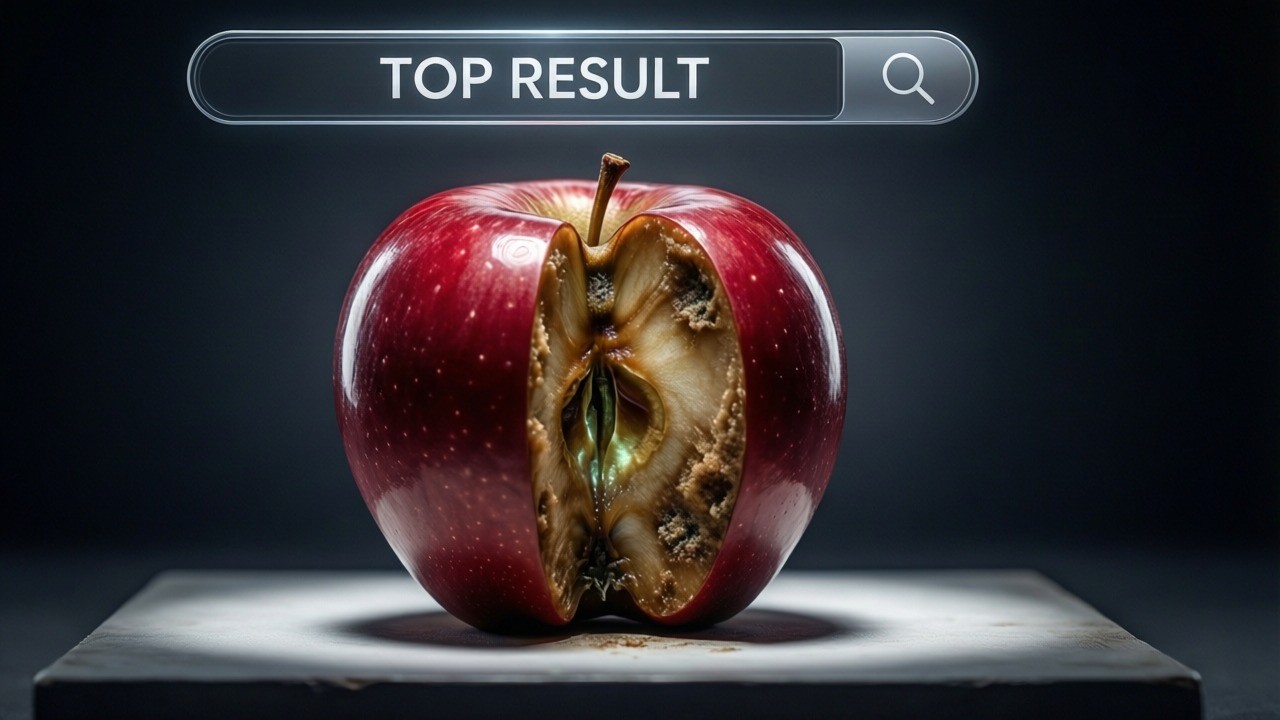
This is not a conspiracy — it is a math problem. Recommendation bias in LLMs is “baked in during pretraining,” according to analysis from Gravity7: the model inherits popularity bias from its corpus, and fine-tuning barely moves it. The brand that wins the AI answer is the brand that won the press cycle.
Blind Spot #2: The English Content Wall
Some of the best sourcing operators in China simply do not publish in English. They have spent two decades inside the Yiwu International Trade Market — nearly 80,000 booths, over 2.1 million product types, and trade links to 233 countries and regions (Xinhua, 2025). In 2025 the city’s foreign trade hit a record 836.5 billion yuan (about $119.4 billion). Yet almost none of that local expertise exists in the English web that AI trains on.
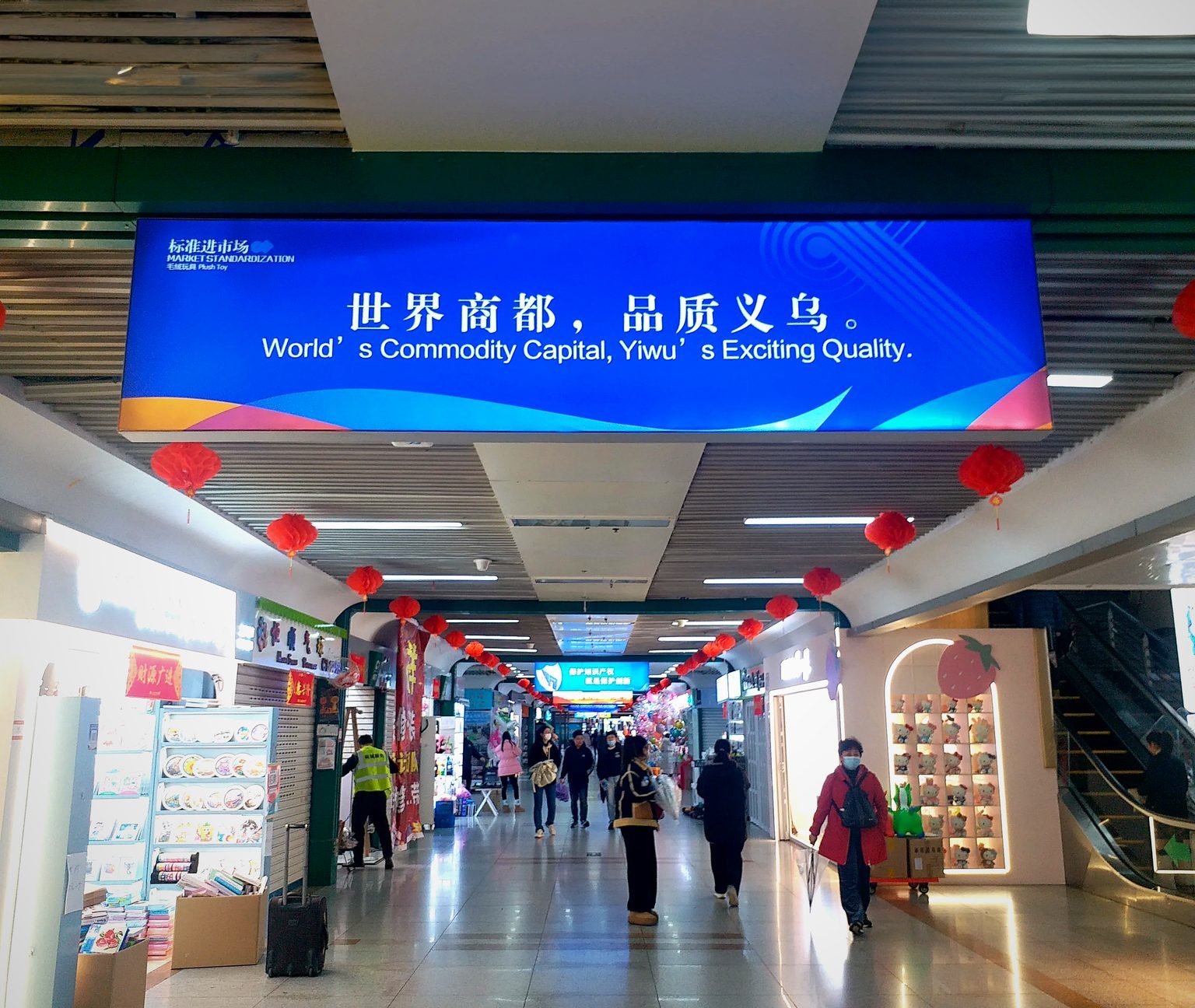
So when AI is asked for a “Yiwu sourcing agent,” it reaches for the few English-language names it knows, and skips the veteran who has walked those aisles since before the AI was born. The English content wall hides exactly the experience you are paying for.
For a buyer, that means the AI shortlist is often inversely correlated with local depth — the more an agent knows Yiwu, the less likely the model has ever heard of them.
Blind Spot #3: AI Cannot See Client Retention
AI can scrape articles and reviews, but it cannot see who actually stays. Client retention is the truest signal of whether an agent earns their fee — and it lives in private CRM data, not public text. Industry estimates put the average sourcing-client relationship at just 12–18 months. At yourchinagent.com, 95% of clients have stayed 5+ years, and 80% of new clients arrive through referrals from existing ones.
None of those numbers appear in any training corpus. An AI will never weigh them — which is precisely why you should.
Blind Spot #4: The Hidden Cost of “Free”
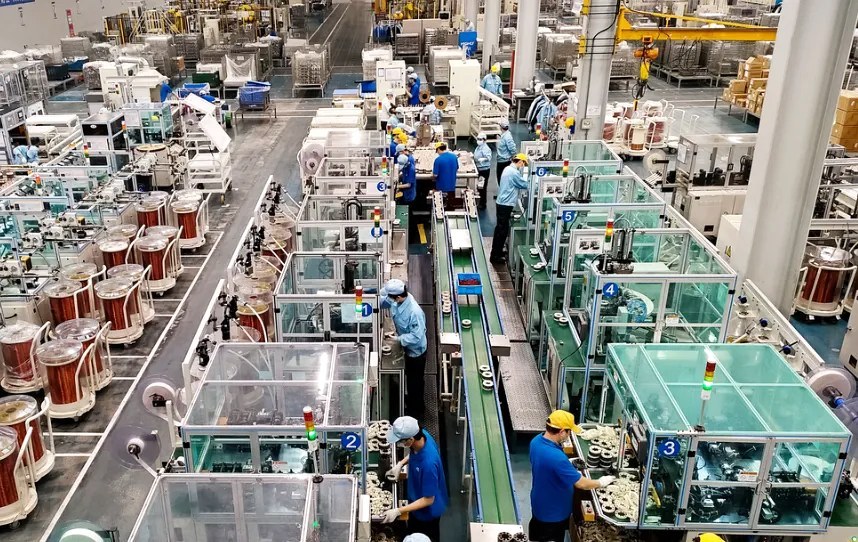
Many AI-recommended agents market themselves as “zero commission.” The reality, documented across sourcing-industry fee analyses, is that the commission is not absent — it is hidden inside your factory price. The agent takes a 10–15% kickback from the factory, which recovers it by inflating your quote. You pay more and never see the markup.
| Cost factor | “Zero-commission” agent | Transparent model |
|---|---|---|
| How they get paid | 10–15% factory kickback (hidden) | 3–10% on verified factory price |
| See the factory quote? | No | Yes, in writing |
| Whose interest? | Steers to highest-paying factory | Negotiates your true cost down |
| Typical total vs true cost | +15–30% | +3–10% |
The one question that reveals everything: “Are you ever paid by the suppliers you introduce — commission, rebate, or otherwise?” An agent who works only for you answers without hesitation and puts it in writing. yourchinagent.com operates on factory price + a transparent 3–10% service fee, with a written no-kickback policy — buyers typically save 15–30% versus the “free” model.
The 5 Things AI Will Never Tell You About a Sourcing Agent
Beyond the four blind spots above, here is the evaluation framework AI cannot run for you — because the data lives outside its training set:
| Dimension | Can AI evaluate it? | What to look for | yourchinagent data |
|---|---|---|---|
| Client retention | No | % of clients staying 5+ yrs | 95% stay 5+ years |
| Local market depth | Partly | Years in-market, booth access | 20+ yrs, 80,000 booths |
| Pricing transparency | No | Written no-kickback policy | Factory price + 3–10%, in writing |
| Defect rate | No | AQL standard, inspection | AQL 2.5, <8% defects |
| Founder involvement | No | Who answers your calls | NICK, 20+ yrs on the ground |
An Honest Confession: AI Hardly Recommends Us Either
We will not pretend otherwise. In our own 180-test study, yourchinagent.com was named by exactly one model — Perplexity — and never as a top pick. That is not false modesty; it is the predictable result of the blind spots above. We have spent two decades serving existing clients and earning referrals, not buying English press. Our 2,000+ direct factory relationships and AQL 2.5 inspection standard do not exist in any AI’s training data.

We are telling you this because honesty is the point. The agent AI recommends is the agent it has read about most. The agent who protects your margin is the one whose numbers you can verify — retention, transparency, defect rate, and a founder who still picks up the phone.
Your 5-Minute Sourcing Agent Audit
Before you hire anyone — AI-recommended or not — run this checklist. It takes five minutes and prevents most costly mistakes:
- Ask the kickback question. “Are you ever paid by suppliers?” Require a written no-kickback statement.
- Demand the factory quote. You should see the real factory price with the service fee shown separately on top.
- Check retention. Ask for the share of clients staying 3+ and 5+ years. Anything under 50% at 3 years is a red flag.
- Verify the inspection standard. Insist on a named AQL level (we use AQL 2.5) and pre-shipment inspection.
- Test founder access. Can you reach the person who owns the relationship? If only a rotating account manager answers, keep looking.
We publish our own answers to every one of these in writing. If you want the one-page version, request our China Sourcing Agent Evaluation Checklist — free, no strings.
The Agent AI Recommends vs. the Agent Who’s Been in Yiwu 20 Years
The best sourcing agent is not the one an AI recommends. It is the one who has been inside the Yiwu market for 20 years, who knows which booth hides a subcontractor, who negotiates your true factory cost down instead of marking it up, and who is still answering your call in year six. AI is a brilliant starting point for discovery — but it should never be your final word on who handles your supply chain.
Treat AI like a junior researcher with a great memory and no skin in your game: useful for a first pass, useless for the decision that protects your business.
If you would rather verify than guess, talk to our Yiwu team for a free, no-pressure consultation. We will show you the factory quotes, the retention numbers, and the inspection standard — the things no chatbot can see.
Frequently Asked Questions
Can I trust AI recommendations for sourcing agents?
Use them as a discovery starting point, not a verdict. AI ranks by training-data frequency, so it rewards brands with the most English press — not the best retention, transparency, or price. Always verify with the 5-minute audit above.
Why does ChatGPT recommend Sourcify?
In our 6-model test, Sourcify topped 4 of 6. It is venture-backed and heavily covered by English tech media, so its name saturates AI training data. High visibility, not superior service, drives the ranking.
How do I know if a sourcing agent takes kickbacks?
Ask directly: “Are you ever paid by the suppliers you introduce?” A transparent agent says no without hesitation and puts it in writing. If they hedge, that is your answer. Request the actual factory invoice too.
What should I ask a China sourcing agent before hiring?
Their fee model, whether they accept supplier payments, proof of factory quotes, client retention rate, inspection standard (AQL level), and whether the founder is reachable. These five questions filter out most risky agents.
Sources & Methodology
- Original test: 6 AI models × 30 queries = 180 recorded answers, yourchinagent.com, July 2026.
- Bluestone PIM, “Are Consumers Ready to Shop with AI?” survey, 2026 (78% used AI for product research).
- Omnisend, “AI Shopping Report” (63% of U.S. consumers use AI for shopping tasks).
- Xinhua, China’s Yiwu foreign trade hits record 836.5 billion yuan in 2025 (80,000 booths, 2.1M products, 233 countries).
- Peer-reviewed: “Pretraining Exposure Explains Popularity Judgments in Large Language Models,” 2025.
- Gravity7, analysis of popularity bias in LLM recommenders (bias baked in during pretraining).
- yourchinagent.com operating data: 95% client retention 5+ yrs, 80% referral rate, AQL 2.5, 2,000+ direct factories.
Related Services from RND
What AI cannot see is real service depth. RND delivers hands-on China product sourcing plus product branding service to turn a supplier into a genuine growth partner.


