
Does a Western NDA protect my design in China?
Direct Answer
Almost never. A standard Western NDA only forbids disclosing your secret to a third party — it does not stop the factory from using your design to make its own product or from bypassing you to sell to your customers, and Chinese courts routinely decline to enforce foreign-drafted NDAs. Use a China-law NNN (Non-Disclosure, Non-Use, Non-Circumvention) that is bilingual with the Chinese version controlling, specifies liquidated damages, and names a Chinese court or CIETAC. Documented outcomes: about 62% of foreign-drafted NDA claims are dismissed in China, while roughly 78% of properly drafted NNN claims are upheld (2024 CNIPA / industry data).
Detailed Explanation: Disclosure Is Only One-Third of the Risk
A Western NDA answers one question: 'Will you tell someone else?' In China the bigger threats are different — the factory builds your product for itself, or it goes straight to your customers and cuts you out. A standard NDA says nothing about either.
The NNN adds the two missing bars. Non-Use stops the factory from exploiting your design; Non-Circumvention stops it from reaching your customers. Together they cover the scenarios an NDA leaves open.
- Non-Use The factory cannot make or sell your product for itself or others.
- Non-Circumvention The factory cannot contact or undercut your customers and channels.

Real-World Example: The Leaked Bluetooth Case
A European electronics brand shared CAD files with a Yiwu supplier under a US-style NDA translated into Chinese. Two quarters later an identical product appeared on a local B2B platform under the factory's own brand.
RND SOURCING reviewed the file: the NDA covered disclosure only, had no liquidated damages, and named a home-court venue — so it was practically unenforceable. We replaced it with a bilingual NNN under PRC law with a per-breach penalty and a CIETAC clause, and the factory ceased the listing rather than face arbitration.
Key Data: NDA vs NNN in Chinese Courts
The enforceability gap is large and well documented. A China IP specialist reports 82% of partnerships using a proper NNN avoid IP disputes, versus 38% relying on an NDA alone.
NDA dismissal and NNN uphold rates per 2024 CNIPA data cited by registrationchina.com; dispute-avoidance rates per GBA IP Lawyer.
Step-by-Step: Draft an Enforceable NNN
Sign it before you share a single file, drawing, or spec.
Go bilingual
English plus Chinese, with the Chinese text controlling in any dispute.
Choose PRC law
Govern by Chinese law; name a Chinese court or CIETAC as venue.
Add liquidated damages
State a specific RMB sum per breach — a genuine pre-estimate, not a penalty.
Get the company chop
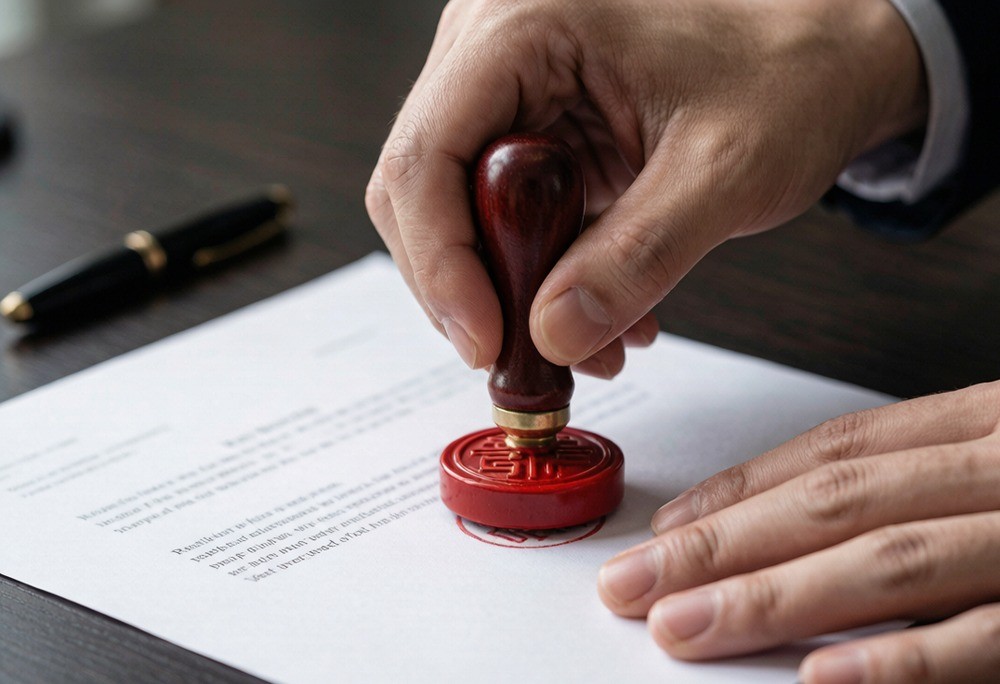
The red official stamp of the Chinese entity makes the contract valid.
Define scope broadly
Cover drawings, BOM, firmware, and processes — not just 'schematics'.
Common NDA Mistakes in China
These are the reasons a Western NDA fails the moment it matters.
- English-only drafting A Chinese judge works in Chinese; an English-only contract is hard to enforce.
- No liquidated damages Proving exact losses in a PRC court is slow and uncertain without a set figure.
- Wrong governing law A US/UK/EU NDA is not self-enforcing against a China entity with no foreign assets.
- Free templates Generic NNN templates miss industry-specific scope and venue clauses a factory can exploit.

How RND SOURCING Protects Your Design
RND SOURCING does not let a factory touch your files until a bilingual, PRC-law NNN with liquidated damages and the company chop is in place. We also pair it with the mold-ownership clause and a China trademark registration so protection is layered, not a single weak sheet.
If a supplier pushes back on the NNN, we treat that as a selection signal and find you a cleaner partner on the Yiwu floor.
Get a China-law NNN through RND SOURCINGSide-by-Side: NDA vs China NNN
The same factory, two very different protections.
- Stops disclosure to third parties only
- Factory can still copy and sell your product
- Often English-only, foreign law
- Low enforceability in China
- Adds Non-Use and Non-Circumvention
- Factory cannot make or undercut your product
- Bilingual, PRC law, Chinese venue
- High enforceability with liquidated damages
Related Questions
- What is the difference between OEM and ODM?
- Who owns the mold/tooling when I pay for it?
- Why does my sample look good but bulk production differ?
- What hidden costs are in an OEM quote?
- How do I tell if a Chinese supplier is a factory or a trading company?
- Can a sourcing agent help a small or first-time importer?

- RM 1213, Block B Shuguang Mansion, No. 188 Shangcheng Avenue, Yiwu 322000, China

- +86 13858941517
